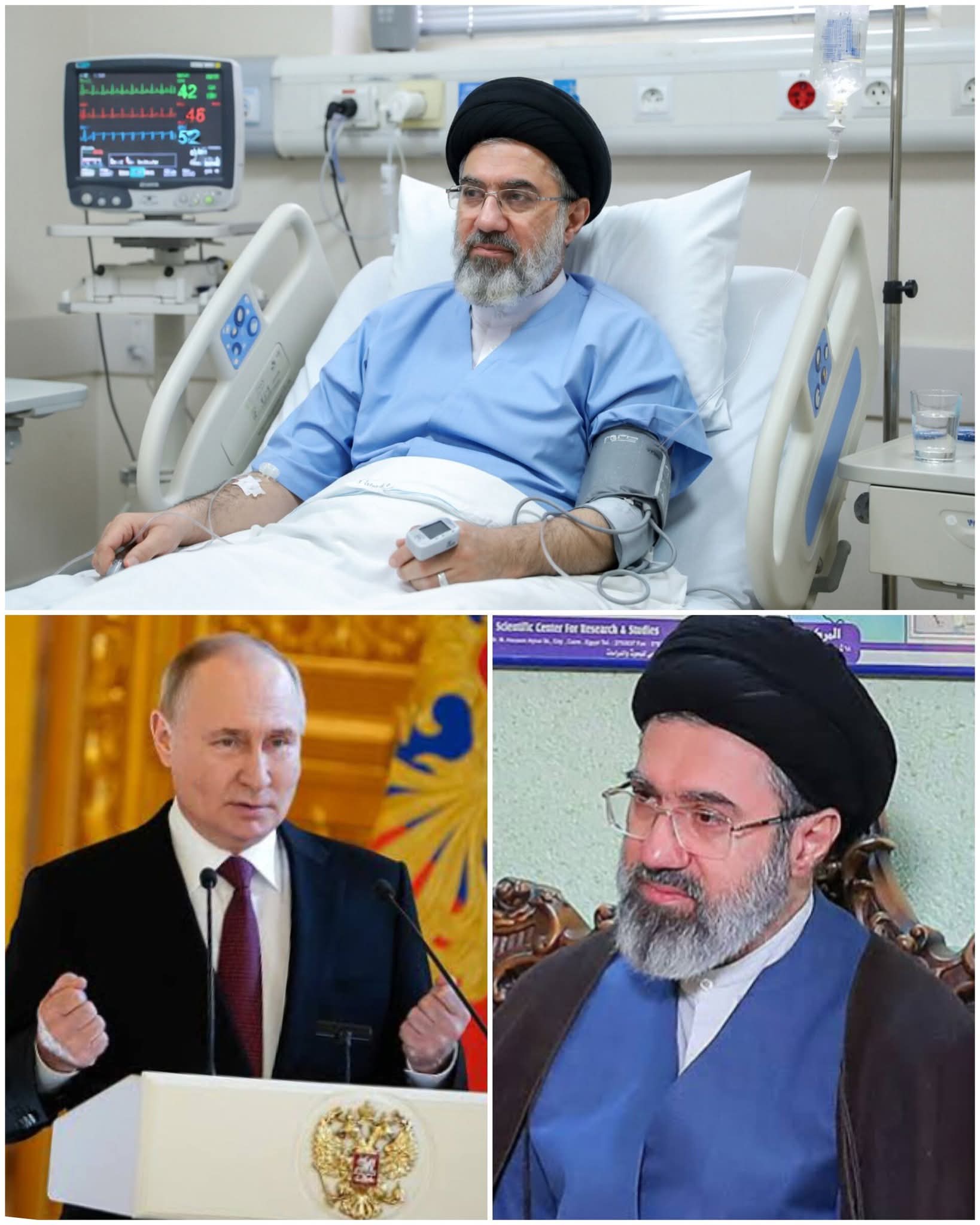
Mojtaba Khamenei, the influential son of Iran’s Supreme Leader and a prime candidate for the country’s top leadership, was critically injured during the February 28 precision strikes on Tehran. Intelligence sources confirm he was covertly extracted from Iran via a military transport aircraft and underwent emergency surgery in Moscow, where he remains under heavy guard at a facility adjacent to a private residence of Vladimir Putin. This breach in the inner sanctum of the Iranian regime exposes a precarious power vacuum at the heart of the Tehran-Moscow axis, with profound implications for the global balance of power.
The Architecture of Succession and Secrecy
The attempted decapitation strike on February 28 marks a tectonic shift in the Middle Eastern security landscape. Mojtaba Khamenei has long been viewed as the ‘shadow leader’ of Iran, managing the intelligence apparatus and the Islamic Revolutionary Guard Corps (IRGC) logistics. His injury disrupts a meticulously planned dynastic succession strategy that has been in development since 2019. Moscow’s involvement—providing both transport and high-level medical sanctuary—underscores the deepening integration of the Russian and Iranian security states. Data from flight tracking services indicates that the military plane utilized for the extraction bypassed conventional civil aviation protocols, signaling the level of panic within the Iranian politburo.
Southern Africa’s Strategic Vulnerability
For Zimbabwe and the broader Southern African Development Community (SADC), this crisis is not a distant Middle Eastern affair; it is a direct threat to the regional geopolitical status quo. Harare has long cultivated deep security ties with Tehran, often relying on Iranian intelligence cooperation to suppress internal dissent. Dr. Tendai Mbuyi, a security analyst based in Johannesburg, notes, ‘When the Iranian security architecture wobbles, the ripple effects hit the streets of Harare. Zimbabwe’s reliance on Iranian technology for surveillance and state security means that a power vacuum in Tehran could leave the ZANU-PF government’s primary intelligence partners distracted or paralyzed.’ As Iran pivots its resources toward internal survival, the security guarantees previously extended to its African allies may evaporate.
Economic Shockwaves and Global Sanctions
The injury of a key power broker like Mojtaba creates an immediate, tangible economic risk for nations currently benefiting from the ‘sanction-evasion’ trade routes shared by Russia, Iran, and Zimbabwe. Analysts at the Atlantic Council suggest that if Moscow is forced to prioritize Iranian stability over its own domestic needs, the supply chains for illicit gold and lithium—crucial to the Zimbabwean economy—could face severe disruption. Should the IRGC’s influence wane in Tehran, the intricate network of front companies laundering funds through Southern African banks faces imminent exposure, potentially triggering secondary sanctions from Western financial institutions that would cripple local liquidity.
The International Response: A Fragile Silence
Official channels in Tehran have maintained a strict blackout, describing the February 28 event as a ‘routine security exercise,’ yet the international community is scrambling. A senior diplomat in the UN Security Council, speaking on condition of anonymity, stated, ‘We are witnessing the unraveling of a dynasty. Moscow’s decision to host Mojtaba is a high-stakes gamble by Putin to ensure he holds the strings of the next Supreme Leader.’ While the U.S. State Department has declined to comment on specific intelligence, the shift in military posture in the Persian Gulf suggests that Washington is preparing for a period of extreme volatility in the Iranian hierarchy.
The Path Ahead: A Region in Flux
The recovery of Mojtaba Khamenei in a Russian hospital is merely the opening chapter of a much larger destabilization event. For Zimbabwe, the lesson is clear: reliance on pariah states for security and economic survival is a liability that is rapidly compounding. As Iran enters a period of intense internal power struggles, the ‘Axis of Resistance’ will likely fragment. Harare must now decide whether to double down on its failing partnerships or pivot toward a more sustainable, transparent international strategy. The coming months will determine if the Iranian model of authoritarian continuity survives its most significant surgical and political operation to date.