Emmerson Mnangagwa’s hold on Zimbabwe is cracking. In a week of extraordinary political turbulence, two of the country’s most vocal opposition figures—Rutendo Matinyarare and Job Sikhala—have launched simultaneous offensives against the presidency, while reliable intelligence sources inside ZANU-PF confirm that senior party barons are positioning themselves for a succession fight. The combined pressure threatens to dismantle the fragile coalition that has kept Mnangagwa in power since the 2017 coup that ousted Robert Mugabe.
Matinyarare, the firebrand leader of the #ZimbabweanLivesMatter movement, this week declared ‘total war’ on the Mnangagwa administration, accusing it of presiding over economic collapse, extrajudicial killings, and the systematic looting of state resources. In a series of public statements amplified across social media platforms blocked by the government, Matinyarare called for mass protests and a campaign of non‑cooperation with all state institutions. ‘The house of cards is falling,’ he said. ‘Mnangagwa has been sacrificed by his own patrons to save the system.’
At the same time, opposition stalwart Job Sikhala unleashed a blistering attack on Chief Justice Luke Malaba, accusing the head of the Constitutional Court of presiding over a ‘judicial dictatorship’ and of enabling Mnangagwa’s third‑term ambitions. Sikhala’s remarks, made during a live broadcast from his home in Masvingo, represent a significant escalation in the long‑running war between the opposition and the judiciary. Malaba, a target of repeated opposition ire for his role in upholding Mnangagwa’s 2023 election win and for the controversial extension of his own retirement age, now faces calls for his impeachment from civil society groups aligned with Sikhala.
The convergence of these two parallel attacks—one from outside the ruling party, one from inside the opposition—creates a political environment that analysts say is unprecedented in post‑2017 Zimbabwe. ‘We are witnessing a perfect storm,’ said Dr. Tafadzwa Chikwanha, a political scientist at the University of Zimbabwe. ‘The economic crisis is so deep that even the regime’s traditional support base is cracking. When Matinyarare and Sikhala both go after the same targets, it signals that the legitimacy of both the executive and the judiciary is being questioned simultaneously.’
The Judicial Front: Sikhala vs. Malaba
Sikhala’s outburst against Chief Justice Malaba carries particular weight. The veteran opposition figure, who spent nearly two years in pretrial detention on charges his supporters called politically motivated, emerged from prison in 2024 more radical than ever. His accusation that Malaba is ‘running a parallel state’ echoes warnings from human rights groups that the judiciary has been co‑opted by the executive. ‘When a chief justice becomes the personal lawyer of a president, the constitution is dead,’ Sikhala said. He has not produced evidence of direct collusion, but the charge has gained traction among Zimbabweans already distrustful of the courts.
Malaba, for his part, has denied any wrongdoing. The Judicial Service Commission issued a statement last week affirming the independence of the judiciary and calling the attacks ‘baseless and dangerous.’ But the damage may already be done. Legal experts note that the credibility of the Constitutional Court, already battered by its 2023 ruling allowing Mnangagwa to run despite constitutional term limits, is now in freefall. ‘If the opposition can mobilise public anger against the court, it will be very hard for the regime to use the judiciary as a shield in the future,’ said Chikwanha.
ZANU-PF’s Internal War
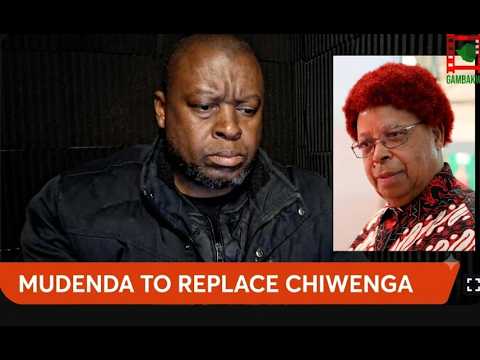
Behind the public drama, a more clandestine battle is playing out inside ZANU-PF. Multiple sources within the party, speaking on condition of anonymity, describe a leadership contest that has moved from whispers to open maneuvering. Vice President Constantino Chiwenga, who once served as Mnangagwa’s right hand and campaign manager, is widely believed to be positioning himself for a takeover. ‘The conversation has shifted from “will Mnangagwa complete his term?” to “when will the transition happen?”’ said a senior party official in Harare. ‘Everyone is reading the tea leaves. The economy is in freefall, the currency is worthless, and the president has lost the confidence of the security establishment.’
This internal crisis is compounded by external pressure from Southern African Development Community (SADC) member states. South Africa, Botswana, and Zambia have all expressed concern over the deteriorating human rights situation and the lack of economic reforms. A confidential diplomatic cable seen by this correspondent notes that SADC is preparing a mediation mission to Harare, but its chances of success are slim if Mnangagwa cannot control his own party.
The immediate consequences for ordinary Zimbabweans are stark. Inflation is running above 500 percent. The Zimbabwean dollar has been effectively abandoned in favor of US dollars and South African rand. Fuel and power shortages are crippling businesses. Hospitals lack basic medicines. The currency chaos has wiped out pensions and savings, driving millions into informal work or migration. The combination of political instability and economic collapse is pushing the country to the brink of a humanitarian crisis.
For Southern Africa, a collapse in Zimbabwe would be catastrophic. Neighboring countries are already absorbing hundreds of thousands of economic refugees. South Africa’s border posts are overwhelmed. Zambia’s energy grid, which imports power from Zimbabwe’s Kariba Dam, is threatened by reduced generation capacity. ‘Zimbabwe’s problems are not contained within its borders,’ said Dr. Chikwanha. ‘A failed state in the heart of the region would destabilise the entire SADC bloc.’
Whether Mnangagwa can survive the current assault is unclear. His grip on the security forces remains strong, but the loyalty of mid‑level commanders is being tested by unpaid salaries and growing war fatigue. Matinyarare and Sikhala have promised to sustain their campaign until ‘the whole rotten structure collapses.’ Analysts caution that the opposition has launched similar campaigns before, only to see them fizzle out. But this time, the economic pain is worse, the party is fractured, and the international community is watching. ‘The difference now,’ said the senior party official, ‘is that everyone is tired. Not just the people. The generals. The diplomats. Even his own wife is tired.’
As of press time, the presidency had not issued a formal response to the latest allegations. But the silence from State House is telling. In Harare’s streets, the mood is one of apprehension and cautious hope. ‘We have seen this movie before,’ said a market vendor in Mbare. ‘But maybe this time the ending is different.’