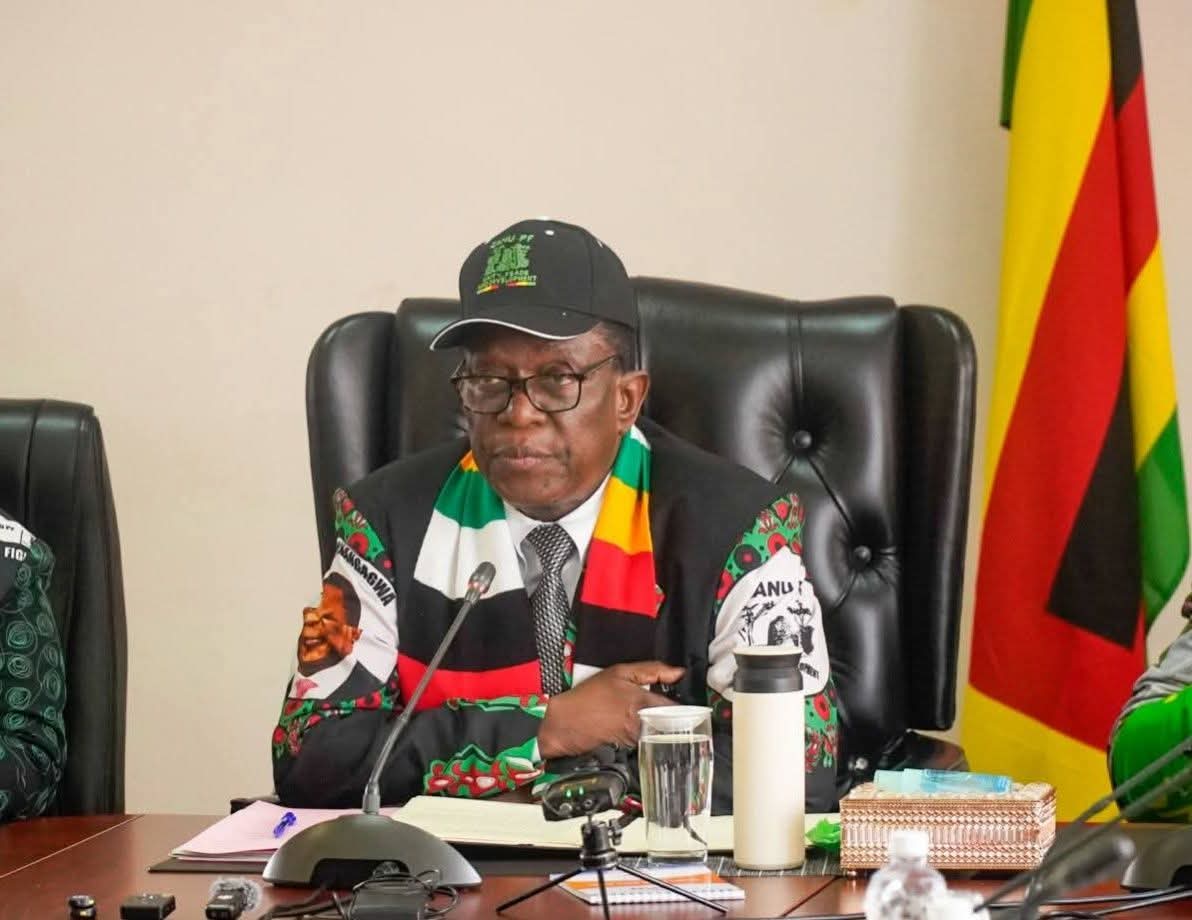
President Emmerson Mnangagwa has formally declared the absolute supremacy of the ZANU-PF party over the Zimbabwean state, signaling a tightening of political control ahead of the nation's 46th Independence Day celebrations. Addressing the 391st Ordinary Session of the Politburo in Harare, the President demanded total alignment between government policy and party ideology, while simultaneously pivoting toward aggressive mineral beneficiation and a bid for a non-permanent seat on the United Nations Security Council for 2027-2028. This consolidation of power arrives as the administration faces mounting pressure to stabilize a volatile economy and address the systemic corruption that continues to stifle foreign direct investment.
The Historical Shadow of Party Supremacy
The concept of 'party supremacy' has been the bedrock of ZANU-PF governance since Zimbabwe’s independence in 1980. Historically, this doctrine has served to blur the lines between state institutions and party apparatus, often leading to the politicization of the civil service and the judiciary. Since Mnangagwa ascended to power following the 2017 military-assisted transition, the rhetoric of 'Vision 2030'—a roadmap aimed at transforming Zimbabwe into an upper-middle-income economy—has been the primary justification for centralizing authority. Data from the World Bank indicates that despite these centralized efforts, Zimbabwe’s GDP growth remains vulnerable to climate-induced agricultural shocks and hyperinflationary pressures, with the local currency losing significant value against the USD throughout 2023 and 2024.
Geopolitical Implications for Southern Africa
Mnangagwa’s focus on securing a UN Security Council seat is a strategic maneuver to bolster international legitimacy, yet regional analysts remain skeptical. 'The attempt to project stability through a UN bid is a classic diversionary tactic,' notes Dr. Tendai Mupfumi, a regional political analyst based in Johannesburg. 'By asserting party supremacy, Mnangagwa is signaling to SADC neighbors that the Zimbabwean model of governance—where the party dictates the state—is non-negotiable.' This posture creates friction within the Southern African Development Community (SADC), particularly as neighboring nations like Zambia and Botswana push for greater democratic accountability. Zimbabwe’s energy security concerns, exacerbated by Middle Eastern instability, threaten to disrupt regional power grids, potentially leaving the Southern African Power Pool (SAPP) struggling to meet demand.
Economic Realities and the Resource Curse
The President’s directive to prioritize local mineral beneficiation is a direct response to the 'resource curse' that has long plagued the nation. While Zimbabwe holds the world's second-largest platinum reserves and significant lithium deposits, the benefits have rarely trickled down to the average citizen. According to the Zimbabwe Coalition on Debt and Development (ZIMCODD), illicit financial flows in the mining sector cost the country an estimated $1.5 billion annually. By mandating local value addition, the government claims it seeks to capture more revenue, yet critics argue that without addressing the lack of transparency in mining contracts, these policies will only benefit a well-connected political elite rather than the broader population.
Public Reaction and Institutional Skepticism
Public sentiment remains deeply polarized. While the government touts a 'highly successful harvest' in the agricultural sector, the reality on the ground for many rural Zimbabweans is one of food insecurity and high input costs. 'We hear the rhetoric about Vision 2030, but our hospitals are empty and our pockets are worse,' says a Harare-based civil society leader who requested anonymity for safety reasons. International human rights organizations have also raised alarms over the 'performance-based human resource system' mentioned by the President, fearing it may be used to purge civil servants who are not loyal to the ZANU-PF party line. The disconnect between official government narratives and the lived experience of citizens continues to widen.
The Road to 2027 and Beyond
As Zimbabwe approaches its 46th Independence Day, the path forward is fraught with systemic risks. The government’s focus on the UN Security Council bid suggests a desire for global diplomatic cover, but domestic stability will ultimately depend on economic reform and the cessation of party-state conflation. Analysts suggest that unless the government moves beyond performative policy shifts and addresses the fundamental issues of governance, the divide between the state and its citizenry will only deepen. The coming months will be a critical test of whether Mnangagwa can deliver on his promises of prosperity or if the nation will remain trapped in a cycle of political consolidation at the expense of sustainable development.