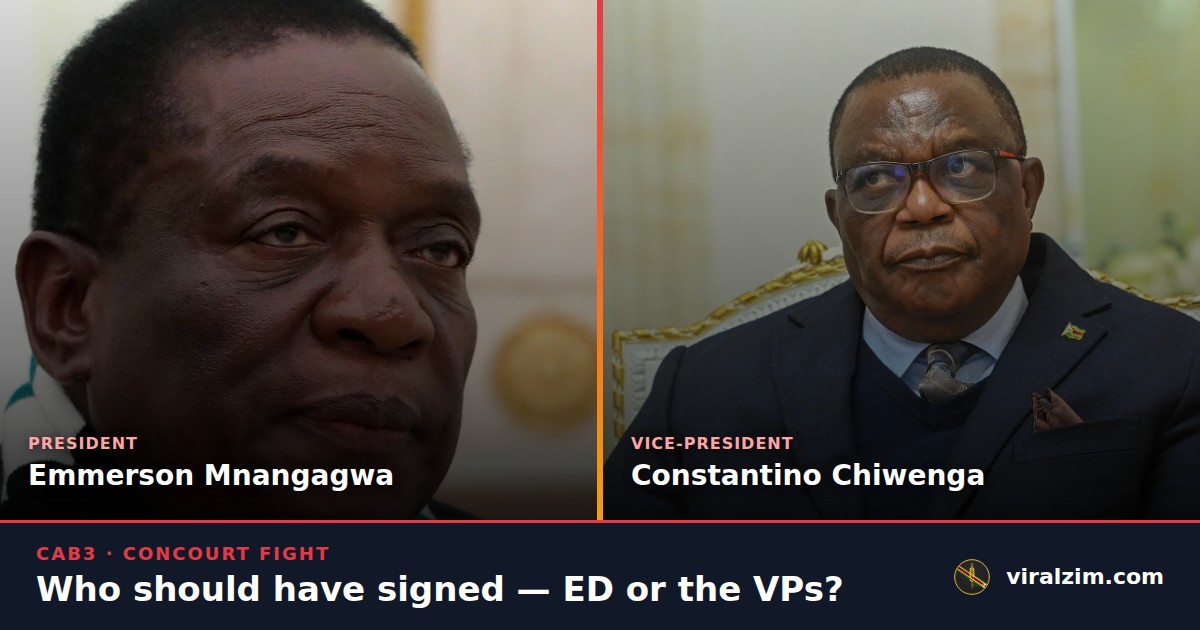
In July 2024, Masvingo party leadership convened an inter-district meeting that publicly denounced Chiwenga and framed the province’s position as a defence of the current leadership line. The meeting’s message was unambiguous: Masvingo wanted President Emmerson Mnangagwa to remain in office beyond the constitutional two-term limit, signalling support for continuity through 2030. Senior provincial figures, including Munyaradzi Machacha and other leadership elements, were present as the province delivered its position.
From alignment to confrontation: why Masvingo’s demand matters
Political analysts who study authoritarian party systems often stress that succession battles are fought through institutions, not just personalities. In this case, Masvingo’s demand functions as a test of strength: can the party centre absorb a provincial attack on a vice president, or will it punish the province to reassert discipline?
Masvingo’s July meeting also matters because it links the Chiwenga attack to a broader political line: support for Mnangagwa beyond the constitutional limit. That means the province is not merely disagreeing with Chiwenga’s role. It is rejecting the political understanding that emerged after the 2017 transition—an understanding that has shaped how succession and legitimacy are discussed inside the party.
In other words, the province is trying to rewrite the rules of the succession game. And rewriting the rules always triggers retaliation, because it threatens the bargaining position of the rival faction.
What’s at stake: security influence, patronage networks, and regional risk
Chiwenga’s public anti-corruption posture has become part of the political contest. That matters because anti-corruption messaging can be used in two ways: as a genuine governance agenda, or as a weapon to discredit rivals and justify institutional pressure. When Masvingo structures demand Chiwenga’s sacking while simultaneously backing a continuity line for Mnangagwa, the implication is clear: the province is challenging whether Chiwenga’s influence will be allowed to define the terms of “clean governance” and institutional reform.
In practical terms, Masvingo’s escalation can affect at least three areas inside ZANU PF and the state:
Cabinet and party alignment: Provincial leaders who demand the removal of a vice president are testing whether the centre rewards loyalty or punishes dissent. If the centre ignores Masvingo, it risks encouraging other provinces to follow. If the centre confronts Masvingo, it risks widening the split.
Institutional protection versus backlash: Chiwenga’s public messaging on corruption raises the stakes. If his anti-corruption stance is perceived as selective or factional, it can trigger deeper backlash. If it is perceived as credible, it can strengthen his institutional shield—making Masvingo’s demand more costly and more likely to provoke counter-moves.
These internal dynamics have external consequences. For foreign governments and investors, the central fear is not disagreement inside a ruling party. It is unpredictability—especially when security influence and succession arithmetic collide. When provinces openly demand the sacking of a vice president, it signals that the political system may be moving toward a more volatile phase where decisions are driven by factional power rather than stable institutional processes.
Whether Masvingo’s demand leads to any formal action remains uncertain. But the direction is unmistakable: the province has escalated. Once a province issues a demand of this magnitude, the political cost of ignoring it rises—for the targeted individual and for the leadership that must decide whether to absorb the pressure or confront it.
What to watch next: whether other provinces echo Masvingo’s call; whether the party centre issues disciplinary or unity measures; and whether Chiwenga’s anti-corruption narrative translates into institutional protection or becomes a trigger for deeper factional retaliation.