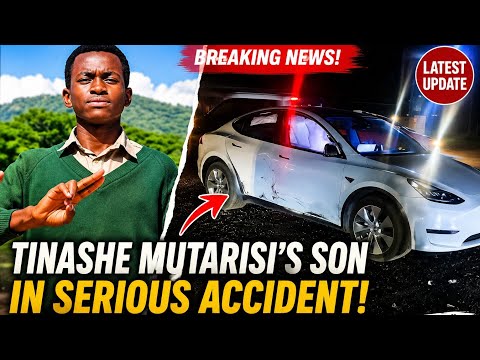
Boterekwa has claimed another family—leaving a young Zimbabwean man alive to bury the people he was supposed to return with. The crash killed his wife and children in a single, catastrophic moment while the family was travelling to visit their grandmother in the village. The survivor is now facing the kind of grief that destroys routines, finances, and futures: he is “crying day and night,” trying to understand how a normal trip ended in total loss.
What happened at Boterekwa—and what it reveals
The family’s plan was ordinary: travel to the village to see their grandmother. Instead, the crash at Boterekwa ended the journey permanently. Relatives and community members describe a sudden catastrophe that left the husband without his wife and children—people who would have provided emotional stability, labour, and support in a household already shaped by economic strain.
In the immediate aftermath, the survivor’s reality is brutal and practical. He must navigate burial arrangements, loss of income, and the collapse of day-to-day responsibilities that depend on a functioning family unit. The emotional toll is equally severe. Grief of this magnitude does not fade quickly; it reshapes mental health, decision-making, and the ability to cope with daily life.
But the investigative question is larger than one family. If a location repeatedly produces fatal outcomes, then the issue is not “bad luck.” It is a chain of preventable failures—road design that does not protect motorists, maintenance gaps that allow hazards to persist, speed discipline that does not deter dangerous driving, and vehicle standards that are not consistently enforced. Each link matters. When multiple links fail at once, the result is mass casualty.
Regional stakes: road deaths, enforcement gaps, and Zimbabwe’s burden
Safety interventions are not abstract. They are measurable: hazard identification and correction, improved signage and lighting, speed-calming measures where appropriate, stricter enforcement of speed limits and vehicle roadworthiness, and rapid public communication when dangerous conditions are detected. If industrial activity, road works, or traffic patterns contribute to risk, regulators must prove they can stop harm before another family is added to the list.
There is also a geopolitical dimension. When road corridors become death traps, the economic cost spreads. Transport delays, higher insurance and operating costs, and reduced confidence in travel safety affect trade flows and regional connectivity. Governments then face pressure to demonstrate competence—not only in emergency response, but in preventing recurrence. Road safety failures can become political flashpoints because they are visible, repeated, and devastating.
For the survivor, the headline is his loss. For the state, the headline must be accountability. The question is simple and urgent: What was known about the risks at Boterekwa, what was done to reduce them, and what enforcement ensured compliance? If the answer is weak or incomplete, then the next crash is not a surprise—it is a foreseeable outcome.
To Mashingaidze: your pain is real, and your loss is enormous. To the public: do not scroll past preventable suffering without demanding action. Type 'RIP' or send a message of encouragement—because in moments like this, solidarity is not sentiment. It is support for the living.