
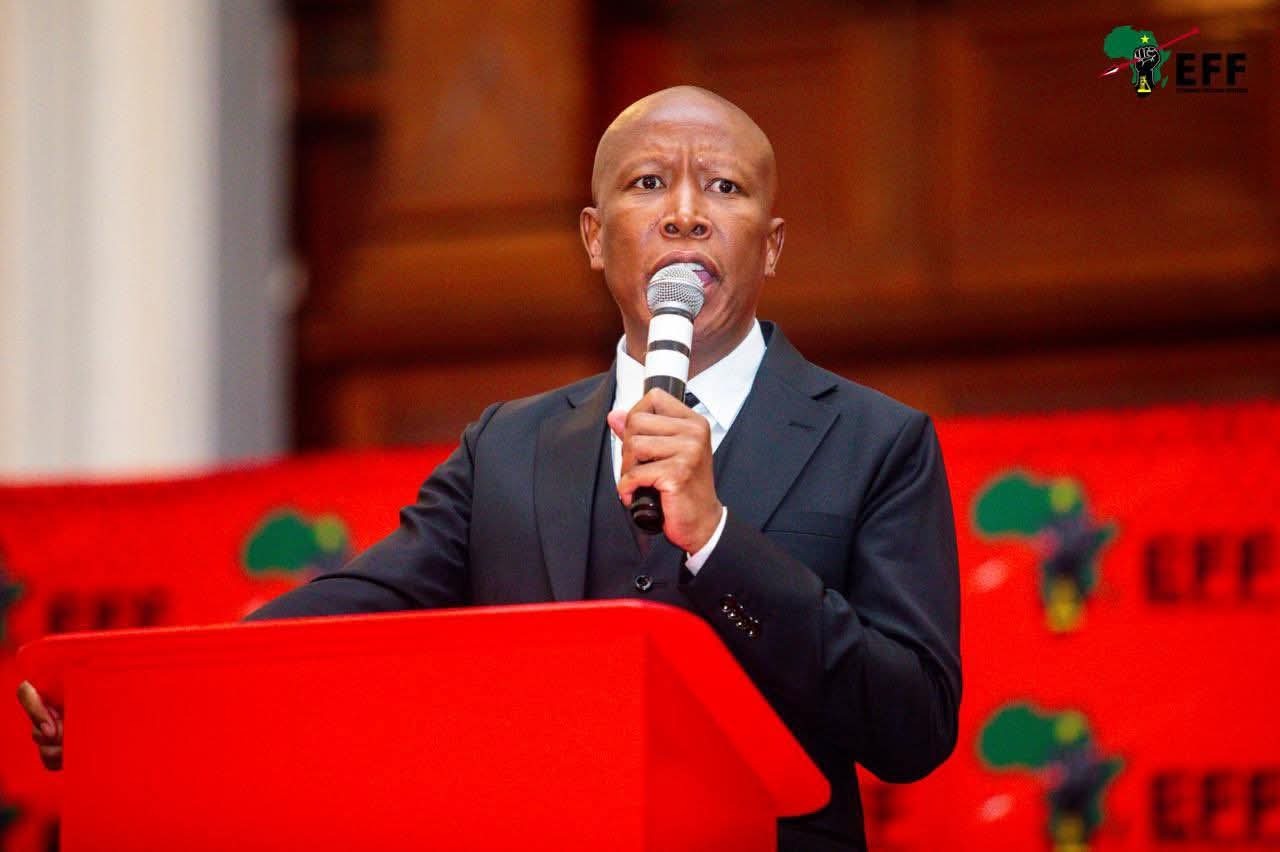
The most consequential fact is this: Julius Malema has been granted bail after being sentenced in the firearm discharge case, meaning the EFF leader will remain free while the legal system processes the next stages of his appeal and sentencing pipeline. In a country where political mobilisation can quickly become public disorder, the decision is not just procedural—it is a test of how the justice system manages high-profile risk after conviction.
Bail after sentencing changes the legal posture. Before conviction, bail decisions focus on whether an accused person is likely to abscond, interfere with witnesses, or disrupt the administration of justice. After conviction, the court’s focus shifts toward the likelihood of success on appeal, the risk profile of the accused, and whether continued freedom undermines public confidence in the integrity of the process. The court’s acceptance of bail conditions signals that it believes the matter can proceed without keeping Malema behind bars.
Freedom on conditions, politics without pause
Malema’s case stems from a 2018 incident at an EFF rally in which he discharged a firearm in public. The legal consequences have since escalated under the Firearms Control Act and related charges, with the timeline shaped by sentencing and appeal steps. On 16 April 2026, Malema was sentenced to five years’ imprisonment in the firearm discharge case. Bail was then granted to allow him to remain outside custody while further legal steps unfold, under conditions that keep him under judicial supervision.
That sequencing matters because it determines how quickly political momentum can be sustained. With bail in place, Malema can continue operating as a national political figure—speaking, organising, and shaping opposition strategy—while the courts determine whether the conviction and sentence will stand. For the EFF, the practical effect is immediate: the leadership remains visible and active during a period when the legal system is still deciding the final outcome.
The case has also become a proxy battle over the boundaries of political conduct in South Africa. EFF supporters have repeatedly framed the prosecution and conviction as politically motivated, arguing that the state is targeting opposition leadership. Opponents argue the opposite: that the conviction reflects a necessary line against political violence and the normalisation of firearms in public life. That clash is now embedded in how many South Africans interpret the opposition’s role in democratic governance—whether it is a legitimate challenge to power or a destabilising force that threatens public safety.
Legal scholars warn that bail in a high-profile case after conviction carries a heavy burden. “When bail is granted in a high-profile case after conviction, it tests public confidence in the justice system’s independence,” said Professor Thuli Madonsela, a legal scholar specialising in criminal procedure. “The court must demonstrate that conditions are sufficient to protect the integrity of the process—because the political stakes are unavoidable.”
In other words, the court is not only weighing risk; it is also managing legitimacy. If the public believes the decision is too lenient, it can be interpreted as a signal that political prominence can dilute accountability. If the public believes the decision is too restrictive, it can be interpreted as punishment before the appeal is heard. Either way, bail becomes part of the political narrative—whether the court intends it or not.
Why Zimbabwe and the region should watch the fallout
South Africa’s political volatility does not stay inside South Africa’s borders. When conflict intensifies, cross-border movement often rises—driven by work, commerce, and, crucially, safety. Zimbabwean communities in South Africa and regional travellers are sensitive to spikes in public disorder. A bail decision that keeps a polarising political leader active can influence the risk calculus for ordinary people, even when the legal process remains ongoing.
Malema’s case also intersects with the EFF’s broader political posture. The party’s confrontational style has historically shaped how rallies are staged and how crowds respond. That is precisely why bail is not merely a procedural outcome. It becomes a geopolitical signal about whether the state can enforce boundaries on political conduct without allowing public life to slide into spectacle and confrontation.
“This is where legal outcomes become geopolitical signals,” said Advocate Kudzai Moyo, a Zimbabwean constitutional law analyst. “If the public believes the court is balancing rights and risks fairly, bail can be seen as due process. If not, it becomes fuel for mobilisation—inside South Africa and across the region.”
There is also a second-order effect: the way opposition parties interpret judicial outcomes. If bail after conviction is treated as a victory that can be leveraged for mobilisation, it may encourage more aggressive political tactics. If it is treated as a conditional privilege that comes with strict constraints, it may reinforce deterrence. The court’s decision therefore influences not only Malema’s personal freedom, but also the strategic calculations of political actors who watch how the justice system responds to public disorder.
What happens next is clear. With bail granted and the case continuing through the appellate and sentencing pipeline, the next phase will focus on legal arguments around the conviction and sentence, and on whether the conditions attached to continued freedom remain appropriate. The political calendar also matters: South African opposition parties operate in a high-speed environment of rallies, media campaigns, and parliamentary manoeuvres. Those activities can affect public order and, indirectly, the court’s risk assessment in future hearings.