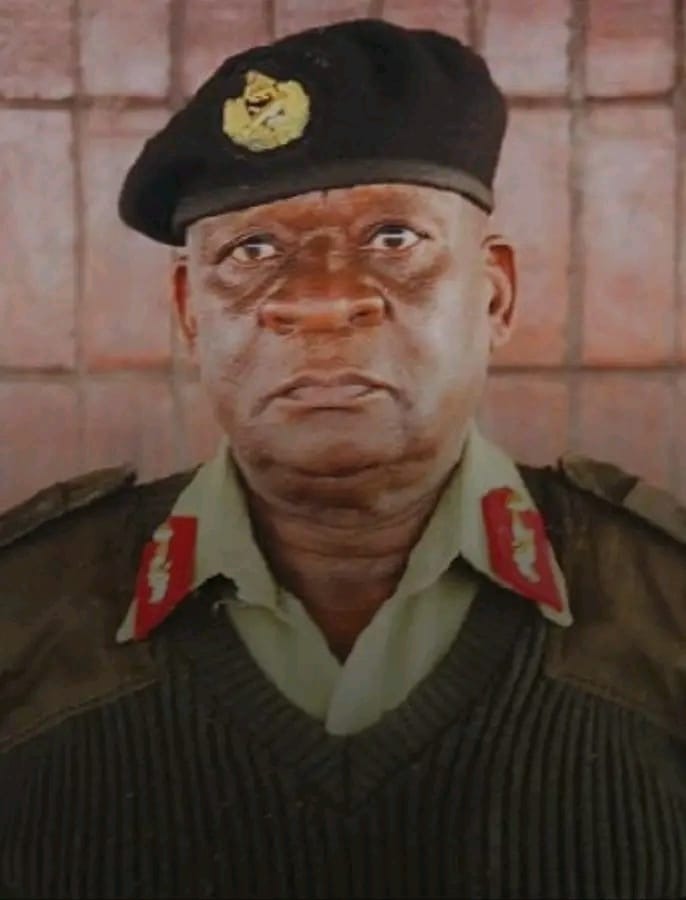
Retired General Sigauke has issued a blistering rebuke of the proposed Constitutional Amendment Bill No.3, declaring it a profound betrayal of both the living and the dead who fought for Zimbabwe’s independence. In a move that has sent shockwaves through the corridors of power in Harare, the former military heavyweight has effectively broken ranks with the ruling ZANU-PF establishment, signaling a fracturing of the security-state alliance that has underpinned President Emmerson Mnangagwa’s administration. This public rejection marks a rare and dangerous fissure within the military-political complex, threatening to destabilize an already fragile nation.
The Shadow of the Liberation Struggle
The roots of this confrontation lie in the deep-seated tension between the 'old guard' of the liberation struggle and the current technocratic-authoritarian push to consolidate executive power. Constitutional Amendment No.3 is widely viewed by legal analysts as a mechanism to erode judicial independence and expand the President’s authority to appoint key officials without parliamentary oversight. Historically, Zimbabwe’s constitution, adopted in 2013 after a national referendum, was designed to curb the excesses of the executive branch. Since 2017, however, the government has pushed a series of amendments that critics argue effectively dismantle these safeguards. For figures like General Sigauke, who served during the formative years of the Zimbabwe Defence Forces (ZDF), these changes represent a departure from the founding principles of the 1980 state.
Geopolitical Implications for Southern Africa
The fallout from this dissent extends far beyond Harare’s borders, threatening the stability of the SADC (Southern African Development Community) region. Zimbabwe sits at the heart of Southern Africa’s geopolitical landscape; when the Zimbabwean state falters, the ripple effects—ranging from mass migration to economic volatility—are felt in South Africa, Botswana, and Zambia. Dr. Tendai Mashingaidze, a regional security analyst, notes, 'If the military apparatus in Zimbabwe begins to fracture along ideological lines, we are looking at a potential security vacuum. SADC cannot afford a destabilized Zimbabwe, as it serves as the transit hub for the region’s logistics and trade.' The rejection of the bill by a high-ranking retired general suggests that the regional perception of Mnangagwa’s 'stability' is rapidly evaporating.
The Economic and Social Cost
The proposed amendment arrives at a time when Zimbabwe is grappling with an inflation rate exceeding 280% and a poverty rate that traps over 70% of the population in subsistence living. By centralizing power, the government risks further alienating international investors who demand the rule of law as a prerequisite for debt restructuring. According to World Bank data, Zimbabwe’s inability to settle its $17 billion external debt is directly tied to governance concerns. General Sigauke’s intervention highlights a growing consensus among the elite that the current path is unsustainable. 'The amendment is not just a legal document,' says economist Dr. Farai Mutasa. 'It is a signal to the international community that the state is retreating from democracy, which will effectively lock Zimbabwe out of global capital markets for another decade.'
Institutional Reaction and Internal Tensions
The government’s response has been one of calculated silence, yet the internal panic is palpable. Sources within the ZANU-PF politburo suggest that the party is scrambling to contain the narrative before it emboldens other retired military officials. 'The General’s statement is a direct challenge to the party’s hegemony,' an anonymous party insider stated. Meanwhile, civil society organizations and the Zimbabwe Human Rights NGO Forum have rallied behind Sigauke’s sentiment, calling for a nationwide protest against the bill. 'The General has given voice to the silent majority,' said a spokesperson for a leading opposition movement. 'He has reminded the ruling party that the army belongs to the people, not to a singular political faction.'
The Road Ahead: A Nation at a Crossroads
As the debate over Constitutional Amendment No.3 intensifies, Zimbabwe faces a binary choice: continue down the path of executive overreach, or return to the constitutionalism promised in 2013. The intervention of General Sigauke has fundamentally altered the calculus for President Mnangagwa. If the bill proceeds, the administration risks a direct confrontation with a segment of the military that still holds significant influence over the rank-and-file. The coming weeks will be critical. If the opposition can leverage this internal ZANU-PF friction, the bill may be stalled or watered down. However, if the government pushes through, it may signal the end of the post-Mugabe era of 'managed transition' and the beginning of a much more volatile period of overt authoritarianism.