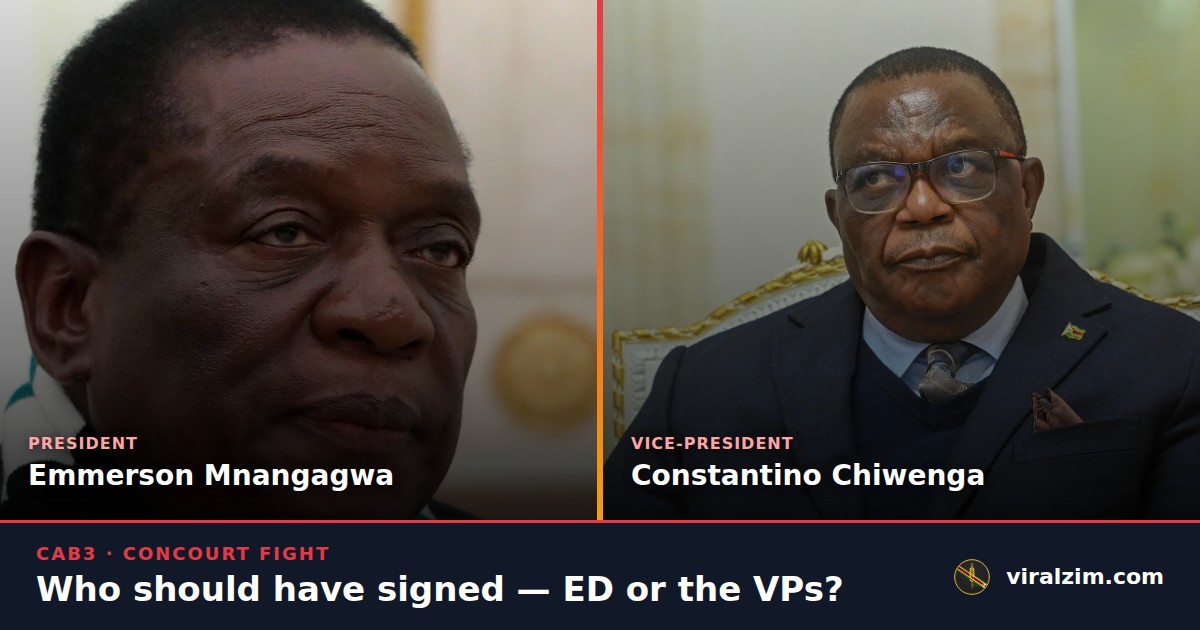
The clash, described by insiders as ‘unprecedented in tone and stakes’, centered on Chiwenga’s demands for a clearer succession timeline and his criticism of Mnangagwa’s handling of the country’s collapsing economy. Chiwenga, a former army general who played a pivotal role in bringing Mnangagwa to power, is widely believed to be positioning himself for the presidency ahead of the 2028 elections. Mnangagwa, however, has recently signaled intentions to remain in power beyond the constitutional two-term limit, raising alarm among party hardliners and military stalwarts.
The emergency Politburo meeting – the second unscheduled gathering in less than a month – underscores the fragility of the alliance that has kept ZANU-PF nominally united since Mugabe’s removal. Analysts note that Chiwenga’s faction, which draws strength from the military and intelligence wings of the party, has grown increasingly impatient with Mnangagwa’s failure to revive an economy plagued by hyperinflation, foreign currency shortages, and a collapsing health sector.
The Factional Battle Lines
‘This is not a policy disagreement; it is a power struggle dressed in party procedure,’ said Dr. Lovemore Madhuku, a political scientist at the University of Zimbabwe, speaking on background. ‘Chiwenga’s faction controls the guns, but Mnangagwa controls the party machinery and the purse strings. When those two clashed in the open, the entire political establishment shook.’ Data from the Zimbabwe Election Support Network shows that internal party infighting has historically preceded violent crackdowns and economic shocks. The last major ZANU-PF split in 2014 led to the expulsion of then-Vice President Joice Mujuru and a purge of her allies.
The current rift is exacerbated by Mnangagwa’s recent reshuffle of provincial party chairpersons, which sidelined several Chiwenga loyalists. In retaliation, Chiwenga’s camp has demanded that Mnangagwa publicly commit to stepping down after his second term or face a vote of no confidence within the Politburo. ‘This is brinkmanship of the highest order,’ warned Professor Ibbo Mandaza, a regional political analyst. ‘If the Politburo cannot find a compromise, Zimbabwe could see a repeat of 2017 – but this time it may not be bloodless.’
Regional Ramifications for Southern Africa
The implications of a destabilized Zimbabwe extend far beyond its borders. As the most industrialized economy in the Southern African Development Community (SADC) after South Africa, a political implosion in Harare would send shockwaves through the region. Neighbouring South Africa is already grappling with its own political uncertainties ahead of the 2024 general elections, while Mozambique continues to battle an insurgency in Cabo Delgado. A fractured ZANU-PF could undermine joint security operations and trade corridors that rely on Zimbabwe’s relative stability.
‘SADC’s policy of non-interference in internal party affairs has been tested repeatedly, but a full-blown Zimbabwean crisis would force a response,’ said Dr. Sithembiso Nyoni, a fellow at the Institute for Security Studies in Pretoria. ‘The region cannot afford another failed state on its flank, especially one that controls key water and energy resources in the Zambezi basin.’ Already, foreign investors are watching nervously. The Zimbabwean dollar has lost 90% of its value in the parallel market since January, and the recent political tensions have accelerated capital flight.
Sources close to the Politburo meeting say that Mnangagwa and Chiwenga were both present but did not directly address each other during the session. Instead, intermediaries read prepared statements. The meeting ended without a formal resolution, with party officials issuing a terse statement that ‘all issues were discussed in a comradely manner’. No date has been set for a follow-up meeting. However, whispers from the party’s youth league suggest that Chiwenga is already mobilizing support among war veterans, a group that was instrumental in Mugabe’s downfall.
The standoff comes at a time when Zimbabwe is also under pressure from Western governments to hold free and fair elections after the disputed 2023 polls. The European Union has frozen direct budget support until Harare implements political reforms. If the power struggle escalates into violence, analysts say the EU and the United States could impose sanctions on specific individuals, further isolating Zimbabwe’s economy.
For ordinary Zimbabweans, the political drama unfolding in the corridors of power is a depressing echo of past crises. ‘We hear these reports of meetings and clashes, but we see no change in our lives,’ said Taurai Muchenje, a small-scale farmer in Masvingo province. ‘The prices go up, the electricity goes off, and the politicians fight. We are tired.’ But the outcome of this emergency Politburo meeting could determine whether that exhaustion turns into a new wave of protests – or a quiet internal coup.
As of press time, neither Mnangagwa’s office nor Chiwenga’s spokespersons had issued official statements. The party’s information department declined to comment, referring all queries to ‘internal party processes’. The silence only fuels speculation that the rupture is deeper than previously acknowledged. Reports from within the party suggest that at least three cabinet ministers aligned with Chiwenga have been put on notice of possible dismissal, while Mnangagwa loyalists have begun circulating a resolution to strip the vice president of his security detail.
The coming days will test whether ZANU-PF can contain its internal divisions or whether the emergency meeting was merely the opening salvo in a protracted conflict that could reshape the political landscape of Southern Africa. The region’s eyes are on Harare, where the fate of the 44-year-old ruling party – and with it the stability of millions – hangs in the balance.