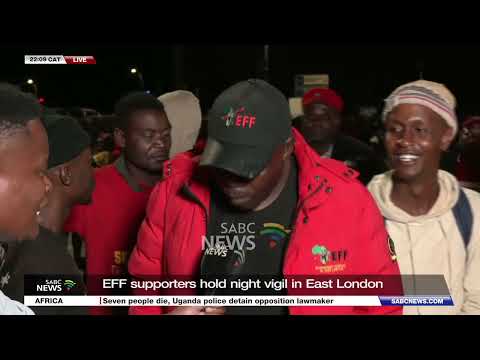
Economic Freedom Fighters (EFF) supporters have issued a stark warning to the South African state, vowing to render the country 'ungovernable' should their leader, Julius Malema, be sentenced to prison. The threat was made during a night vigil held outside the East London Magistrate’s Court, where Malema is set to appear regarding a 2018 firearm conviction.
The atmosphere at the vigil, described as a 'hive of activity' by those on the ground, saw party faithful barricading the area and providing food for attendees, signaling a long-term commitment to the protest. The rhetoric from party leadership at the scene was uncompromising. A local EFF sub-region chairperson stated, 'If the president goes to jail, this South Africa tomorrow by 12 o’clock, it will be at a standstill.'
This development comes at a precarious time for Southern Africa, a region already grappling with economic volatility and political fragility. For neighbors like Zimbabwe, where the political landscape is deeply intertwined with South African policy and economic stability, the prospect of unrest in the continent’s most industrialized nation is a source of significant anxiety. Any disruption to South Africa’s logistics, ports, or financial markets directly impacts the supply chains that sustain the Zimbabwean economy, which relies heavily on its southern neighbor for fuel, food, and essential imports.
The Geopolitical Stakes of Domestic Unrest
The EFF’s aggressive stance reflects a growing trend of populist mobilization in Southern Africa, where political figures increasingly leverage the threat of mass action to challenge judicial processes. Experts point out that such rhetoric tests the resilience of democratic institutions in the region. 'When political parties frame legal proceedings as a direct attack on their leadership and respond with threats of national paralysis, it undermines the rule of law,' noted one political analyst. 'In the context of the SADC region, this creates a domino effect of instability that can deter foreign investment and exacerbate existing inflationary pressures.'
The rhetoric used by supporters—invoking the memory of former President Jacob Zuma’s legal battles and the subsequent unrest—highlights a deep-seated polarization in South African society. The EFF’s strategy of linking the fate of its leader to the functionality of the state is a calculated move to force a political resolution to a criminal matter. As the court date looms, the potential for civil disobedience remains high, with the party’s leadership refusing to outline their strategy in public while maintaining that the country will be 'at a standstill' if a custodial sentence is handed down.
For Southern Africa, the message is clear: the political stability of the region is tethered to the judicial outcomes in Pretoria and beyond. Any move toward 'ungovernability' in South Africa will inevitably trigger a ripple effect, threatening the fragile economic recovery of the entire bloc.