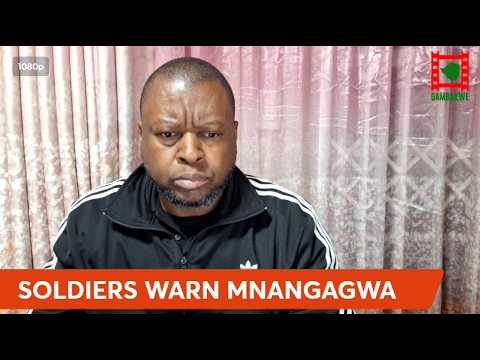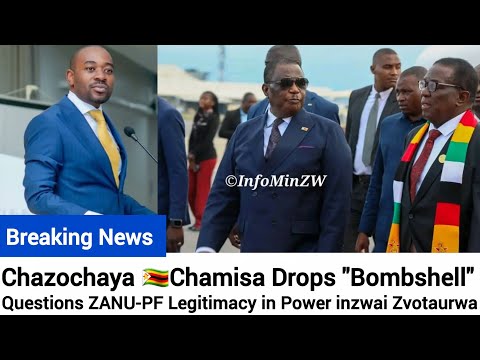
Nelson Chamisa has told Zimbabweans it is “time to remove President ED,” a statement that sharply raises the temperature of an already volatile election-cycle politics—at a moment when the Southern African region is watching closely how Zimbabwe manages legitimacy, violence risk, and economic collapse.
Chamisa, leader of the Citizens Coalition for Change (CCC), made the remarks in the context of renewed public pressure on President Emmerson Mnangagwa’s administration, which has faced sustained allegations of vote-rigging, intimidation of opposition supporters, and governance failures tied to Zimbabwe’s worsening cost-of-living crisis.
While Zimbabwe’s political system remains formally anchored in the Constitution and election law, Chamisa’s language—calling for the removal of the sitting president—moves beyond routine campaign criticism into the territory of regime-change rhetoric. That matters because Zimbabwe’s recent history shows how quickly political contestation can translate into street-level confrontation, especially when opposition parties mobilise and security forces respond.
From ballot-box dispute to “remove” rhetoric
Chamisa’s statement comes as Zimbabwe’s opposition continues to challenge the legitimacy of the 2023 harmonised elections, which the Zimbabwe Electoral Commission (ZEC) declared won by Mnangagwa’s ZANU-PF. The CCC has repeatedly rejected the outcome, arguing that the vote count and the electoral environment were compromised.
In his remarks, Chamisa framed the removal of President ED as an urgent necessity rather than a long-term political aspiration. The phrasing is significant: Zimbabwean politics has often been shaped by disputes over whether change should happen through courts and elections—or through broader political pressure that can include mass mobilisation.
For Zimbabwe watchers, the key question is not only what Chamisa said, but what comes next: whether the CCC will push for legal challenges, parliamentary and civic pressure, or more aggressive street mobilisation—and how the state will respond.
Zimbabwe’s security architecture gives the government broad authority to restrict gatherings and detain suspects under laws that critics say are frequently used against opposition activists. The Zimbabwe Republic Police (ZRP) and the Zimbabwe National Army (ZNA) have both been deployed in past election-related periods to contain unrest. Any escalation in opposition rhetoric therefore carries immediate risk.
“When opposition leaders use language calling for the removal of the president, it changes the political incentives on the ground,” said an analyst familiar with Zimbabwe’s election environment, speaking on condition of anonymity because they were not authorised to comment publicly. “It can energise supporters, but it also gives security forces a justification to treat rallies as security threats rather than political events.”
Regional stakes: SADC, legitimacy, and economic survival
Zimbabwe is not politically isolated. The Southern African Development Community (SADC) has repeatedly positioned itself as a guarantor of democratic norms, including in member states’ election processes. Yet SADC has also been criticised—particularly by civil society groups—for prioritising stability over accountability when disputes become explosive.
Chamisa’s call lands at a time when Zimbabwe’s economic survival is deeply tied to regional and international confidence. Investors and lenders have demanded clearer governance signals, while Zimbabwe continues to face chronic shortages of foreign currency, high inflation pressures, and persistent unemployment.
International partners—especially those with leverage through sanctions policy, debt negotiations, and development finance—often respond to political risk. If Zimbabwe’s internal conflict deepens, it can delay reforms and complicate negotiations on debt restructuring and arrears clearance.
That is why Chamisa’s statement is being read beyond Harare. In Southern Africa, political instability in one country quickly becomes a regional governance issue: migration flows, cross-border trade disruptions, and humanitarian pressure all follow instability. Even countries not directly involved in Zimbabwe’s domestic politics feel the knock-on effects through labour markets and regional supply chains.
“Zimbabwe’s political volatility has a spillover effect across the region because it affects economic activity and investor sentiment,” said Dr. Blessing Moyo, a political risk researcher who has studied Southern Africa’s election dynamics. “Regional bodies like SADC are therefore under pressure to ensure disputes don’t become violent—and to insist on credible processes. Rhetoric that calls for removal can be a trigger, not just a slogan.”
Zimbabwe’s government has previously argued that opposition claims of electoral fraud are designed to incite unrest. The CCC, for its part, has insisted that it is pursuing political change through democratic means, even as it has repeatedly faced arrests and restrictions on campaigning.
Chamisa’s latest statement therefore intensifies a long-running standoff: whether the opposition’s strategy is primarily institutional—courts, parliament, and electoral reform—or whether it is moving toward a broader confrontation with the state.
In practical terms, the immediate impact on Zimbabwe and Southern Africa will depend on three variables: the CCC’s next mobilisation steps; the government’s enforcement posture; and whether regional and international actors apply pressure for restraint and accountability.
Zimbabweans are already living with the consequences of political uncertainty—rising costs, shrinking livelihoods, and a daily struggle for basic services. When leaders frame the political future in terms of removal rather than reform, the risk is that citizens pay the price through instability and disruption.
For now, Chamisa’s words have set a new tone. The next test is whether the CCC can translate rhetoric into a credible political pathway that reduces violence risk—and whether President Mnangagwa’s administration responds with dialogue and legal process rather than crackdown.
Editor’s note: You asked for research based on a YouTube URL you would provide. In this chat, no YouTube link or video title was supplied. If you paste the YouTube URL (or the exact video title), I can verify the primary source, quote the statement accurately, and connect the report to the video’s specific claims and timeline.
Stay across Zimbabwe’s political developments—watch the latest reporting and analysis.