
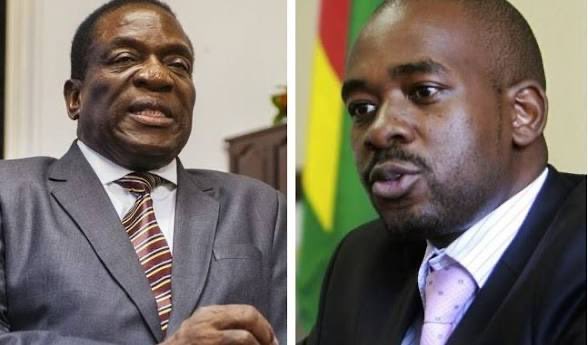
Zimbabwe stands at a precarious constitutional precipice as opposition leader Nelson Chamisa mounts a fierce campaign against alleged maneuvers by the ruling ZANU-PF party to extend President Emmerson Mnangagwa’s tenure beyond the constitutionally mandated two-term limit. The prospect of a 'third term'—or an extension of the current mandate—has ignited a firestorm of political tension, threatening to destabilize not just Harare, but the entire Southern African Development Community (SADC) region.
The Constitutional Crisis: A Power Play
At the heart of the conflict is the 2013 Constitution, which limits a president to two five-year terms. However, whispers of a '2030 project'—a movement within ZANU-PF circles suggesting Mnangagwa should remain in power until 2030—have transformed from fringe rhetoric into a central pillar of political discourse. Nelson Chamisa, the former leader of the Citizens Coalition for Change (CCC), has framed this as a direct assault on the democratic fabric of the nation.
"This is not merely about a term limit; it is about the total erosion of the rule of law," says Dr. Tendai Biti, a constitutional lawyer and political analyst. "If the executive can manipulate the supreme law of the land to suit personal ambition, the entire regional democratic architecture in Southern Africa collapses."
Geopolitical Implications for Southern Africa
Zimbabwe’s political stability is the linchpin of Southern Africa. As a member of SADC, Zimbabwe’s internal governance directly impacts regional trade, migration patterns, and security. Historically, political unrest in Harare has triggered mass migration into South Africa, placing immense strain on the region’s largest economy. A constitutional crisis that leads to civil unrest or a breakdown in governance would likely exacerbate the existing migration crisis, forcing neighboring nations to grapple with the fallout of a failing neighbor.
Furthermore, the SADC bloc has been criticized for its perceived 'soft diplomacy' regarding Zimbabwe. Analysts argue that if the regional body fails to hold Mnangagwa to the constitutional limits, it sets a dangerous precedent for other leaders in the region, potentially emboldening autocracy across the continent.
The Economic Cost of Political Uncertainty
The uncertainty surrounding the 2030 timeline has paralyzed foreign direct investment. Investors demand predictability; they do not find it in a nation where the rules of succession are being rewritten in real-time. Inflationary pressures, coupled with a lack of institutional trust, mean that the average Zimbabwean continues to suffer under the weight of a currency crisis and high unemployment. The political posturing by the elite is, in effect, a tax on the prosperity of the Zimbabwean people.
What to Watch: The Road Ahead
As Chamisa calls for protests and legal challenges, the international community is watching closely. The key indicators for the coming months include:
- Judicial Independence: Will the courts uphold the 2013 Constitution, or will they succumb to political pressure?
- SADC Intervention: Will regional leaders exert pressure to ensure a peaceful transition of power, or will they maintain their policy of non-interference?
- Public Sentiment: How will the youth, who make up the majority of the population, respond to the potential loss of their democratic future?
The fight for Zimbabwe’s presidency is not just a local skirmish; it is a litmus test for the resilience of democracy in Southern Africa. Whether the nation moves toward a constitutional transition or descends into a prolonged period of authoritarian consolidation will define the region’s trajectory for the next decade.