Harare — Zimbabwe’s ruling ZANU PF has moved from rhetoric to retaliation, launching a witch-hunt against people who criticised the proposed #CAB3 after last week’s parliamentary public hearings. According to reports, opposition activists are fleeing their homes after receiving threats linked to their testimony during the process. The crackdown is being framed internally as “discipline” for 2030 dissenters, but critics say it is intimidation designed to silence Zimbabwe opposition voices ahead of future elections and negotiations. The message is stark: in Zimbabwe politics, speaking in parliament is now being treated as a punishable act.
From parliamentary testimony to alleged threats on the streets
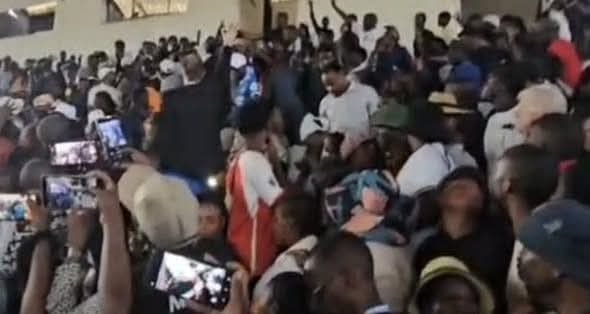
Last week, Zimbabwe’s parliamentary public hearings on the proposed #CAB3 became a public battleground—one that drew activists, opposition figures, civil society members and ordinary citizens into the machinery of state. The hearings were meant to be a democratic filter: a chance to scrutinise proposals before they harden into policy. Instead, multiple sources now allege that ZANU PF operatives have turned those hearings into a dossier.
Newsday Zimbabwe reported that ZANU PF “unleashes terror on 2030 dissenters,” describing a campaign targeting individuals who spoke against #CAB3. The report says several opposition activists fled their homes after threats, implying a coordinated effort to identify and punish dissenters. The story is not just about one policy proposal; it is about how power responds when public scrutiny becomes inconvenient.
Zimbabwe’s political history is littered with episodes where dissent—especially dissent that occurs in public forums—has been met with coercion. During previous constitutional and electoral reform debates, critics have repeatedly complained of intimidation, surveillance and selective enforcement. What makes the current allegations especially alarming is the speed and specificity: testimony in parliament allegedly translated into threats in private spaces.
In the background sits the broader “2030” framing that ZANU PF has used in recent years to justify long-term political and economic programmes. “2030 dissenters” is a label that, according to the report, is being used to describe those who challenge the ruling party’s direction. That framing matters: it turns policy disagreement into a loyalty test, and loyalty tests are where political violence often begins.
Southern Africa’s stability risk: when constitutional debate becomes a security operation
For Southern Africa, the implications go beyond Zimbabwe’s internal politics. Zimbabwe is a regional anchor state in SADC—economically, diplomatically and politically. When parliamentary debate is met with alleged intimidation, it weakens the credibility of institutions that other governments rely on for regional norms: rule of law, predictable governance and peaceful contestation.
Experts have long warned that the politicisation of security and the targeting of political speech are early indicators of wider democratic backsliding. Dr. Eldred Masunungure, a Zimbabwean political analyst, has argued in previous interviews that “the ruling party’s grip tightens whenever it senses that public institutions are being used to challenge its narrative.” While he was not speaking specifically to #CAB3 in this report, his analysis aligns with the pattern now being alleged: public hearings are treated as an arena that must be controlled, not debated.
There is also a geopolitical layer. Zimbabwe’s international partners—particularly those invested in governance reform and sanctions dialogue—watch not only outcomes, but process. If the process is marred by threats, it becomes harder for Zimbabwe to claim it is pursuing inclusive reforms. That can affect negotiations with external stakeholders, including those tied to debt relief, investment risk assessments and humanitarian funding.
Moreover, #CAB3 is not occurring in a vacuum. Zimbabwe’s economy remains under severe pressure—high inflation, currency instability, unemployment and constrained fiscal space. When economic stress combines with political intimidation, the risk is that grievances are pushed into the streets rather than channelled through institutions. That is a regional concern because migration pressures, cross-border trade disruptions and humanitarian impacts do not stay inside one capital.
In SADC, democratic legitimacy is a currency. If Zimbabwe’s parliament is perceived as a stage where dissent is punished after the cameras stop, it undermines the credibility of the entire Southern African governance project.
What the alleged crackdown is doing to Zimbabwe opposition space
The reported consequences are immediate and personal. Newsday Zimbabwe says opposition activists have allegedly fled their homes amid threats after speaking against #CAB3 during the hearings. That is not a theoretical risk; it is a disruption to basic life—housing, safety, family stability and the ability to participate in political processes.
When activists are forced into hiding, it reduces the number of voices that can credibly engage in public debate. It also changes the incentives: citizens begin to calculate not whether their arguments are persuasive, but whether their arguments are dangerous. That is how intimidation silences dissent without needing to formally ban it.
There are also second-order effects. Zimbabwe opposition parties rely on activists, lawyers, community leaders and civil society to build momentum and mobilise voters. If those networks are destabilised through fear, opposition parties face a structural disadvantage—especially in the run-up to elections and policy votes that shape governance for years.
Internationally, donors and investors interpret political violence risk through patterns. A campaign that targets people who spoke in parliament will be read as a signal that institutional checks and balances are weakening. That can translate into higher risk premiums for Zimbabwe, delayed investment decisions and more cautious engagement by external governments.
For Zimbabwe’s neighbours, the ripple effects can include increased cross-border tension. People fleeing threats often seek refuge in safer areas, including outside their immediate province or city. In Southern Africa, where borders are porous and labour mobility is common, political violence can quickly become a migration and security issue.
Officials under pressure: silence, denial—or accountability?
At the centre of the controversy is accountability. If threats are being issued to individuals for speaking in parliament, Zimbabwe’s institutions—police, prosecutors, parliament’s oversight structures and the courts—are immediately implicated by omission if they do nothing.
Opposition leaders and rights advocates have repeatedly called for investigations into alleged politically motivated violence. In this case, critics argue that the ruling party’s internal discipline mechanisms are being weaponised against dissenters. The Newsday Zimbabwe report frames the campaign as terror against “2030 dissenters,” suggesting that it is not random harassment but a targeted political operation.
Human rights lawyers typically emphasise that political speech protections must be enforced in practice, not in speeches. One Zimbabwe-based constitutional lawyer, speaking generally on political intimidation risks, has noted that “when the state fails to investigate threats against critics, it creates a permissive environment where violence becomes normalised.” That principle is now being tested in Zimbabwe.
Internationally, regional bodies and diplomatic missions often respond when there is credible reporting of intimidation. But the effectiveness of such responses depends on evidence—names, dates, locations, and documented threat incidents. For now, the reported flight of activists points to urgency, but it also raises the stakes for verification and protection.
If ZANU PF denies wrongdoing, it must do more than issue statements. It must allow independent verification, cooperate with investigations and ensure that alleged perpetrators are identified and prosecuted. Zimbabwe’s credibility—inside and outside SADC—will be judged by whether the rule of law is applied to ruling-party-linked intimidation.
What happens next: investigations, protections, and the fight for safe dissent
The next phase will determine whether this becomes a short-lived outcry—or a durable intimidation system that reshapes Zimbabwe politics for years.
First, parliament must treat the allegations as an institutional problem, not a party problem. If people who spoke against #CAB3 are being threatened, the parliamentary process itself is under assault. Oversight committees should seek written and sworn accounts, and parliament should demand security assurances for witnesses and participants.
Second, Zimbabwe’s police and prosecution authorities must investigate credible reports of threats. That means recording statements, tracing communications, identifying suspects and reporting outcomes publicly. Without investigations, the message to Zimbabwe opposition and civil society will be that dissent has consequences without remedy.
Third, international partners and SADC stakeholders should calibrate engagement based on process integrity. Zimbabwe’s reform claims are judged not only by policy drafts but by whether citizens can speak without fear. If intimidation is allowed to persist, it will complicate regional efforts to promote electoral credibility and governance reforms.
Finally, activists and communities will push for protective measures—safe reporting channels, legal support, and documented monitoring of threats. In Zimbabwe, where political competition is intense and the economy is fragile, the ability to dissent safely is not a luxury. It is a prerequisite for stability.
For now, the most shocking fact remains the simplest: people who spoke in parliament about #CAB3 are allegedly being hunted afterward. In a country already strained by economic hardship, that kind of fear does not stay confined to politics—it spreads into daily life, regional confidence and the future of Zimbabwe’s democratic institutions.