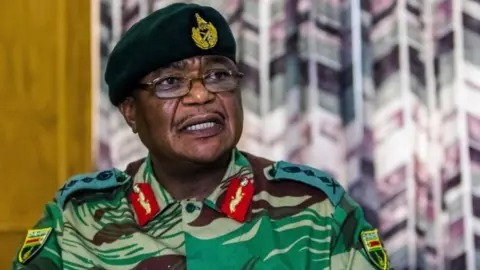
In the current political landscape, Kuda Tagwirei is being positioned by influential figures as a key financier and organiser around President Emmerson Mnangagwa’s inner circle. Constantino Chiwenga, long viewed as a military-aligned counterweight within the ruling party’s power architecture, is being portrayed by opponents as resisting the growing influence of business-linked networks. That rivalry is no longer confined to private manoeuvres. It is now playing out in factional moves, corruption accusations, and the contest over who controls the state’s future gatekeepers.
That is why the Tagwirei-versus-Chiwenga narrative matters. It signals a potential shift in how power is consolidated—away from traditional balancing mechanisms and toward a model where networks tied to finance and patronage can shape state decisions. For ordinary Zimbabweans, the consequences are not abstract. Elite factional battles tend to produce policy inconsistency, economic uncertainty, and the diversion of state capacity into internal protection rather than governance.
How the succession battle is tightening inside ZANU-PF
Tagwirei’s growing political footprint is being framed as an organising force within ZANU-PF structures. The argument advanced by his supporters is that he is a practical operator—someone who can mobilise resources, coordinate networks, and help translate political influence into durable institutional control. In a party where patronage and organisational reach often determine who rises, that kind of influence can become decisive.
That is the core of the current tension: Central Committee co-option and succession messaging are colliding. Co-option determines who gets influence inside the party’s decision-making organs. Messaging determines who appears legitimate to the public and to party structures. When both are contested simultaneously, factions can mobilise provincial networks and use public narratives to weaken opponents—turning internal party politics into a high-stakes national contest.
In this environment, the vice-presidency is not just a constitutional role. It is a strategic position that can shape succession outcomes, influence security and administrative coordination, and signal to domestic and international partners where the ruling coalition is headed. A move that places a figure associated with sanctions risk at the top of the succession ladder would not be a purely internal matter—it would reverberate through diplomacy, investment confidence, and regional political calculations.
International pressure and the regional consequences for Southern Africa
The international dimension is now central to the story. The United States sanctions framework that has already touched Tagwirei is not a background detail—it is a pressure lever that can influence how foreign partners respond to any future appointment. Sanctions are not only punitive; they are also signalling mechanisms. They communicate that certain networks are viewed as high-risk and that engagement may be constrained.
If the vice-presidency were to shift toward a sanctioned figure, the probability of renewed diplomatic friction would rise. That friction can quickly become economic friction: investors and lenders often price political risk into interest rates and timelines, while governments and multilateral institutions adjust engagement strategies to avoid reputational and compliance exposure.
For Zimbabweans, the question is not whether rumours circulate. It is whether the ruling party can prevent factional escalation from spilling into governance. The next confirmed appointments, Central Committee decisions, and institutional statements will clarify whether this succession narrative becomes policy—or whether it is contained before it turns into a deeper rupture.