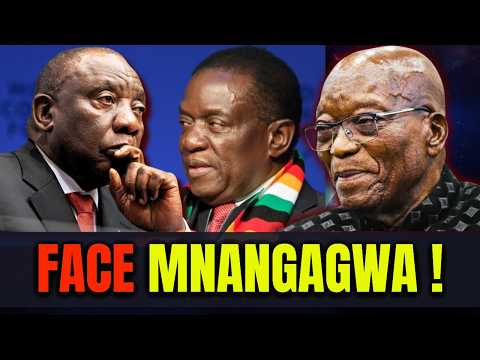
The Douglas Mwonzora-led Movement for Democratic Change (MDC) has formally notified the Zimbabwe Republic Police of its intent to stage a massive, high-stakes demonstration on April 4, 2026, in Harare. The protest serves as a direct challenge to the controversial Constitutional Amendment Bill No. 3, a legislative maneuver critics argue will further consolidate executive power and erode judicial independence. Thousands of party supporters are expected to converge on Africa Unity Square, setting the stage for a volatile confrontation with state security forces in the heart of the capital.
A History of Constitutional Contention
Zimbabwe’s constitutional landscape has been a battlefield since the 2013 Constitution was adopted, which promised a new era of democratic accountability. However, since 2017, the ruling ZANU-PF government has systematically dismantled these safeguards through successive amendments. Amendment No. 3 is the latest iteration, reportedly seeking to alter the appointment process for senior judicial officers and expand the President’s authority over the National Prosecuting Authority. Douglas Mwonzora, who took the helm of the MDC following a protracted legal battle over party leadership, now positions his faction as the final bulwark against what he describes as 'the death of constitutionalism.' The move is critical, as previous attempts to curb executive overreach have largely been stifled by a compliant parliamentary majority.
Geopolitical Implications for Southern Africa
The instability in Harare is not an isolated event; it sends shockwaves across the Southern African Development Community (SADC). Regional leaders, particularly in South Africa and Botswana, have long feared that a total collapse of democratic norms in Zimbabwe would exacerbate the migration crisis, already straining regional resources. Political analyst Dr. Tendai Mashingaidze notes, 'If the MDC’s protest is met with the typical heavy-handed response from the state, it will signal to SADC that the window for meaningful democratic reform in Zimbabwe has effectively closed.' The regional bloc, currently struggling with its own economic headwinds, cannot afford a volatile neighbor whose governance trajectory threatens the stability of the entire SADC trade corridor.
Real-World Consequences of Legislative Drift
The economic impact of the proposed bill is already being felt in the markets. Since the bill’s introduction, the Zimbabwe Stock Exchange has seen a 12% decline in foreign investor participation, citing 'heightened regulatory uncertainty.' For the average Zimbabwean, the stakes are even higher. With inflation hovering near 40% in real terms and unemployment exceeding 80%, the focus on constitutional changes rather than economic stabilization has deepened public resentment. 'The government is rearranging the deck chairs on a sinking ship,' says economist Sarah Moyo. 'By prioritizing the consolidation of power over fiscal policy, they are ensuring that the country remains isolated from international credit markets, which are essential for debt restructuring.'
The Reaction from the Streets and the State
Public sentiment is sharply divided. While the MDC base is mobilizing for the April 4 march, state-aligned media outlets have already begun labeling the demonstration as a 'foreign-funded attempt to destabilize the nation.' Government spokesperson Nick Mangwana stated, 'The state will not tolerate any disruption to public order under the guise of constitutional activism.' Conversely, civil society groups and the Law Society of Zimbabwe have expressed 'grave concern' over the bill. Human rights lawyer Beatrice Mtetwa remarked, 'This amendment is a direct attack on the separation of powers. If the judiciary is compromised, the last line of defense for the ordinary citizen is gone.' The tension between these two narratives is reaching a breaking point.
What Happens After April 4?
The success of the April 4 demonstration will likely determine the political trajectory of the MDC for the remainder of the year. If the protest draws significant numbers despite the threat of police intervention, it could force the government into a public dialogue or, at the very least, delay the bill’s passage. However, a failure to mobilize or a violent crackdown could lead to further fragmentation within the opposition and a total consolidation of power by the ruling party. As the date approaches, all eyes remain on Harare. The outcome will not only define the future of the Zimbabwean constitution but will also serve as a litmus test for the resilience of democratic movements across Southern Africa in an era of increasing authoritarianism.