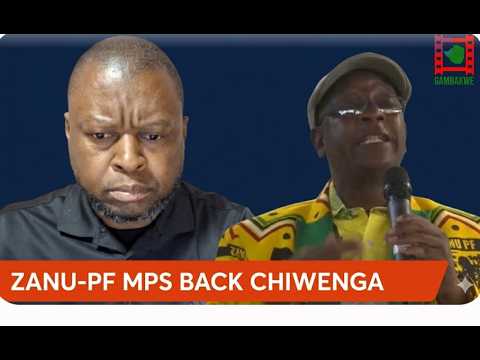
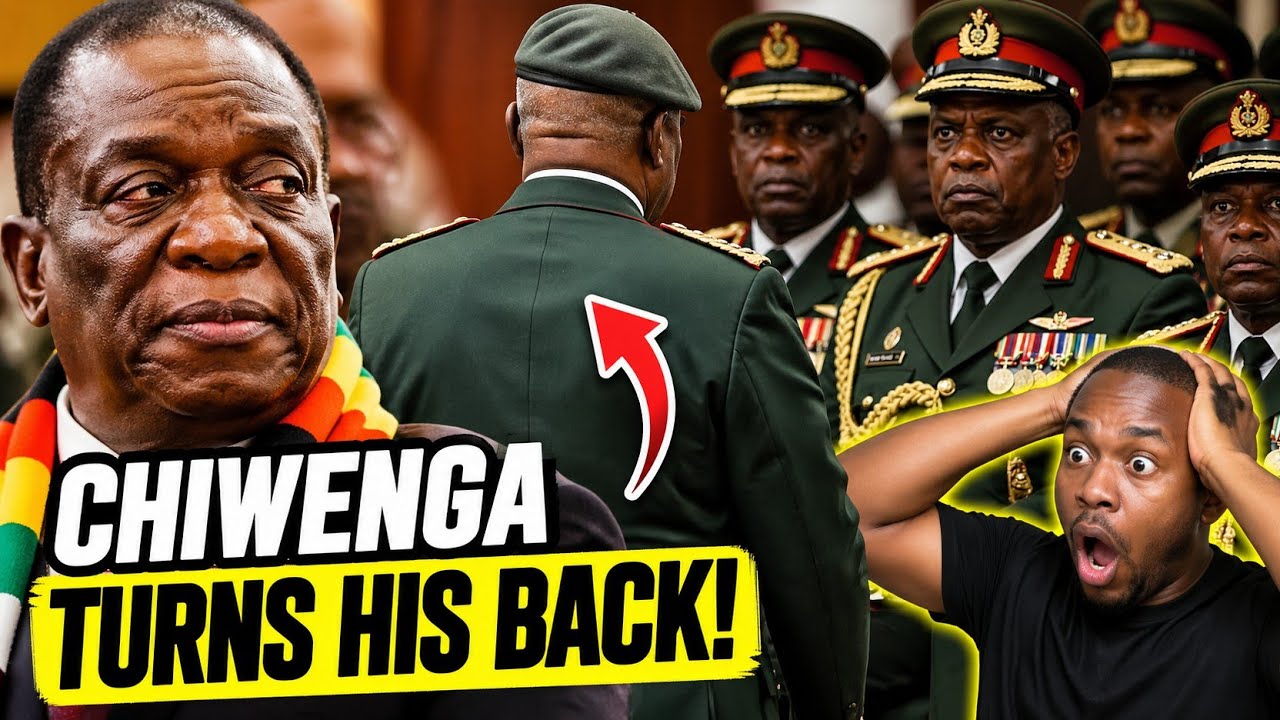
Zimbabwe’s military leadership has broken its silence on the country’s high-stakes political succession, with General Constantino Chiwenga, then-Commander of the Zimbabwe Defence Forces, explicitly rejecting claims that the military is maneuvering to influence the transition of power. In a rare, direct address, Chiwenga dismissed the speculation as “absolute nonsense,” asserting that the military’s role is strictly confined to the constitutional mandate of defending the nation’s sovereignty.
The comments, delivered from the interior of his vehicle, serve as a critical historical marker for the period leading up to the 2017 transition that ultimately ended Robert Mugabe’s 37-year rule. At the time, regional observers and international analysts were closely monitoring the Zimbabwe African National Union – Patriotic Front (ZANU-PF) for signs of fracture. The succession of Mugabe, who was then in his 90s, had created a power vacuum that fueled intense speculation about the influence of the security sector in civilian governance.
The Constitutional Shield
Chiwenga’s reference to Section 212 of the Zimbabwean Constitution is central to understanding the military’s public posture during this era. Section 212 explicitly mandates the Defence Forces to protect the country, its people, and its national security. By invoking this specific legal framework, Chiwenga sought to frame the military not as a political actor, but as the ultimate arbiter of constitutional integrity. “We are the principal organ which will uphold the constitution of the country,” he stated, attempting to decouple the military from the internal factionalism that was tearing through the ruling party.
However, for Southern Africa, the implications of these statements were profound. Zimbabwe’s political stability has historically been a bellwether for the Southern African Development Community (SADC). Any movement within the Zimbabwean military apparatus carries immediate consequences for trade, migration, and regional security. When the military speaks on succession, the entire SADC bloc pays attention, as the potential for a spillover of instability remains a constant concern for neighboring states like South Africa, Botswana, and Mozambique.
Geopolitical Context and Regional Stability
The tension Chiwenga described as existing only in the “minds of mad people” was, in reality, a reflection of a deeply polarized nation. The internal struggle within ZANU-PF between the ‘G40’ and ‘Lacoste’ factions had created a climate of profound uncertainty. Political analysts at the time noted that the military’s insistence on constitutionalism was a strategic maneuver to maintain order while the ruling party navigated its most significant leadership crisis since independence in 1980.
For the people of Zimbabwe and the broader Southern African region, the events surrounding this period were a stark reminder of the fragile balance between military neutrality and political influence. As the region continues to grapple with the legacy of this transition, the emphasis on constitutional adherence remains a primary metric by which international observers assess the democratic health of the nation. The military’s role, as defined by Chiwenga in that moment, continues to be a subject of intense scrutiny, shaping the geopolitical landscape of Southern Africa to this day.