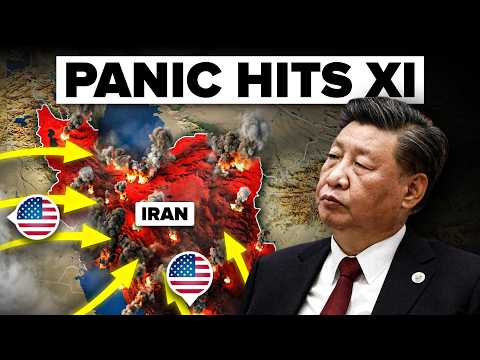
Tehran, Iran – A recent naval exercise conducted by Iran has purportedly delivered a significant “wake-up call” to China's military, exposing unforeseen vulnerabilities in its naval strategy. According to analysis presented in a YouTube video by 'The Military Show', the exercise, the details of which remain largely classified but were observed through satellite imagery and open-source intelligence, highlighted potential shortcomings in China's ability to project power and secure its maritime interests, particularly in regions vital to its economic lifeline.
The Geopolitical Context: China and Iran's Military Cooperation
China and Iran have fostered increasingly close diplomatic and economic ties over the past decade, including collaborations in military training and technology transfer. This partnership is partly driven by mutual concerns about US influence in the Middle East and Asia. However, historical tensions and divergent strategic goals remain. China's Belt and Road Initiative (BRI), a massive infrastructure project, relies heavily on secure maritime routes through the Indian Ocean and Persian Gulf, areas where Iran wields considerable influence. Any perceived weakness in China's ability to protect these routes would have significant implications for the BRI's success. For Zimbabwe, which has also embraced Chinese investment under the BRI, stability in these regions is paramount.
Analyzing the Implications: A Challenge to China's Military Strategy
The implications of this apparent “wake-up call” extend beyond mere military tactics. It raises questions about the effectiveness of China's defense investments and its ability to adapt to evolving geopolitical realities. China's increasing assertiveness in the South China Sea and its growing naval presence in the Indian Ocean have been met with concern by neighboring countries and Western powers. The Iranian naval exercise, if indeed it revealed vulnerabilities, could embolden regional actors and complicate China's strategic calculations. For Zimbabwe, this could mean a recalibration of its own security partnerships and a more cautious approach to relying solely on China for defense capabilities. "This isn't just about naval power; it's about the credibility of China's security guarantees," argues Dr. Tendai Murisa, a Harare-based security analyst. "If China can't project power effectively, it affects its ability to protect its investments and partners in Africa.""
Impact on Trade and Regional Security: Zimbabwe's Perspective
The real-world consequences of a weakened Chinese military could be far-reaching. A disruption to maritime trade routes would severely impact Zimbabwe's economy, which relies heavily on imports from China. According to the Zimbabwe National Statistics Agency (ZIMSTAT), China accounted for over 35% of Zimbabwe's total imports in 2022. Any increase in shipping costs or delays due to security concerns would translate to higher prices for consumers and businesses. Furthermore, instability in the Indian Ocean region could exacerbate existing security challenges in Southern Africa, such as piracy and transnational crime. The South African Navy, already stretched thin, would face increased pressure to patrol the Mozambique Channel, a vital trade route for the region.
Regional Reactions: A Wait-and-See Approach
Governments across Southern Africa are adopting a cautious approach, refraining from public comment on the matter. However, behind the scenes, defense officials are reportedly reassessing their security strategies and evaluating their reliance on Chinese military assistance. Some countries, like Mozambique and Tanzania, which have close ties to both China and Iran, find themselves in a particularly delicate position. The SADC (Southern African Development Community) is likely to address the issue in upcoming security summits, focusing on strengthening regional cooperation and diversifying security partnerships to mitigate potential risks. Market reactions have been muted, but analysts are closely monitoring shipping insurance rates and trade volumes for any signs of disruption.
Looking Ahead: The Future of Sino-Iranian Relations
The long-term implications of this “wake-up call” remain uncertain. It could lead to increased military cooperation between China and Iran, as they seek to address the identified vulnerabilities. Alternatively, it could strain their relationship, as China re-evaluates its reliance on Iran as a strategic partner. For Zimbabwe, this underscores the importance of diversifying its economic and security partnerships and adopting a pragmatic approach to foreign policy. The coming months will be crucial in determining how China responds to this challenge and how its actions will shape the geopolitical landscape in Africa and beyond. The next joint naval exercise between China and Iran, if it occurs, will be closely watched for signs of adaptation and improved capabilities.