JD Vance’s warning landed like a threat disguised as a rebuke: Iran would be ‘dumb’ to let talks over Lebanon collapse, the US vice-presidential candidate said, as Washington pushes a diplomatic off-ramp to prevent a wider regional war. The statement is not just election-season rhetoric—it comes as the Middle East’s conflict architecture is being stress-tested again, and the knock-on effects are already being felt in Southern Africa, including Zimbabwe’s risk calculus on sanctions, shipping costs, oil prices and migration flows. For Harare and the region’s governments, Lebanon is far away—but the financial and security shocks are not.
Vance’s blunt line: diplomacy or consequences
JD Vance—speaking in the context of US policy debates on Iran and Lebanon—argued that it would be ‘dumb’ for Iran to allow negotiations to fail. The phrase matters because it signals a harder American posture: not only a preference for talks, but a warning that failure will trigger a more coercive response. Vance’s comments sit alongside broader US messaging that Washington is trying to prevent the Lebanon arena from becoming a direct, uncontrolled escalation point for Iran-linked forces and Israel.
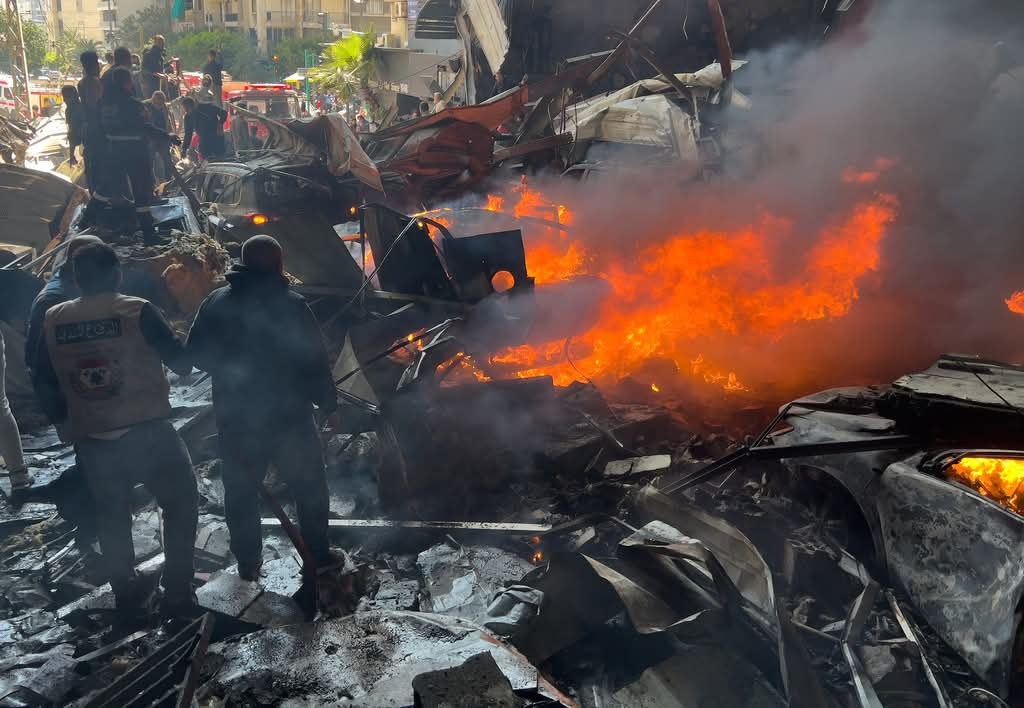
Lebanon’s political and security environment has been fragile for years. The country is still recovering from the 2020 Beirut port blast, a deep economic collapse, chronic governance paralysis and the persistent presence of armed actors outside the state. Over the last year, the risk of a wider war has risen as Israel’s operations in the region have intensified and Iran’s regional network has remained a central driver of deterrence and retaliation calculations.
When US officials talk about ‘talks’ in this context, they are usually referring to a mix of diplomatic channels—some public, some back-channel—aimed at limiting escalation, constraining certain capabilities, or securing temporary arrangements that reduce the probability of kinetic conflict. Vance’s language suggests Washington is trying to lock in a predictable outcome: negotiations should produce restraint, not a collapse that invites military dynamics to take over.
Lebanon’s history of escalation—and why Washington is watching it like a trigger
To understand why Vance’s remark is being treated as consequential, you have to look at the pattern. Lebanon has repeatedly served as a pressure valve—and a flashpoint—for wider Middle East rivalries. In 2006, the Israel-Hezbollah war reshaped regional deterrence. In later years, the country’s internal collapse created conditions where armed groups could operate with limited state control. The result is a system where miscalculation can spread quickly from local incidents to regional confrontations.
Iran’s role—direct and indirect—has been a consistent feature of this landscape. Tehran’s support for Hezbollah and other allied actors has long been framed by Iran as deterrence and by Israel and the US as destabilising aggression. This dispute has produced a cycle: Israel strikes or pressures; Iran-linked forces respond or signal; US diplomacy tries to cap the damage; and then the cycle restarts when political conditions change.
In recent months, the risk environment has tightened further. Even where there is no formal ‘peace process,’ governments and intelligence services monitor signals: leadership statements, militia posture, border incidents, and shipping security. That is why a US candidate’s comment about Iran being ‘dumb’ to let talks collapse is being read as a warning about escalation pathways—especially if negotiations fail to restrain actions around Lebanon.
For Zimbabwe and Southern Africa, the relevance is not ideological. It is economic and logistical. When Lebanon’s security deteriorates, the entire Eastern Mediterranean and Red Sea shipping corridor becomes more volatile. That volatility feeds directly into global freight rates, insurance premiums, and energy markets—variables that Zimbabwe’s economy cannot absorb easily.
What experts say: coercion language raises the stakes for everyone
Foreign policy analysts say Vance’s phrasing is designed to reduce ambiguity for Iran while also preparing domestic audiences for a tougher stance if diplomacy fails. The problem with that approach is that it can compress decision time for all sides—making it harder to manage escalation.
“When senior US figures frame negotiation failure as stupidity or folly, it signals that the window for restraint may be closing,” said Dr. Miriam S. El-Amin, a Middle East security researcher who has advised parliamentary committees on conflict risk. “That kind of messaging can harden positions on the ground, because actors do not want to appear as if they are backing down under pressure.”
Other experts argue that the statement also reflects a US strategy of conditional diplomacy: offer talks, but warn that failure will trigger consequences—whether through sanctions enforcement, military posture changes, or support for Israel’s defensive and offensive options. In this model, Iran is expected to calculate that the costs of letting talks collapse outweigh the benefits of continued confrontation.
But coercive messaging has a second-order effect. It can encourage ‘face-saving’ responses—actions intended to demonstrate resolve even if they increase the risk of miscalculation. That is where the regional danger lies: Lebanon’s security is not controlled by a single actor. It is a multi-actor theatre where signals can be interpreted differently by different armed groups.
For Southern Africa, the implication is straightforward: if diplomacy fails and violence rises, Zimbabwe will feel it through price shocks and fiscal strain. Harare’s policy space—already constrained by debt servicing pressures, currency instability and import dependency—shrinks further when global costs spike.
Impact on Zimbabwe and Southern Africa: shipping, energy, and political risk
When Middle East tensions rise, the first measurable impact is usually on energy and trade logistics. Even without direct conflict in the region, the market reacts to perceived risk. Analysts track indicators like crude oil benchmarks, freight rates, and insurance costs for routes that pass near conflict zones.
Zimbabwe relies on imported fuel and many manufactured goods. Higher global oil prices translate into higher domestic transport and production costs, feeding inflation. Zimbabwe’s inflation dynamics are already sensitive to exchange-rate movements and import costs. A renewed spike in oil prices would therefore worsen the squeeze on households and businesses—particularly in urban centres like Harare and Bulawayo, where transport and food supply chains are tightly linked to fuel prices.
Second, shipping disruptions raise the cost and timing of imports. Even if Zimbabwe does not ship directly through the most contested corridors, its supply chains depend on global freight networks. When insurance premiums rise or ships reroute, the cost is passed along. That means Zimbabwe’s import bill grows—worsening pressure on foreign currency reserves.
Third, there is a geopolitical and governance risk. Regional instability can intensify migration pressures and humanitarian crises, which can spill into SADC policy debates. Zimbabwe has historically engaged in regional diplomacy and humanitarian coordination, but a broader Middle East escalation would increase the strain on already stretched systems.
Finally, sanctions enforcement and financial compliance can become a hidden shock. If Washington tightens pressure on Iran-related networks, compliance burdens can rise for banks and trading firms worldwide. That can affect transactions tied to energy, shipping, and procurement—even for countries far from the conflict.
In practical terms: a Lebanon escalation scenario would likely push up input costs, worsen inflation expectations, and tighten fiscal space. For Zimbabwe’s government and the Zimbabwe opposition, the political consequences are not abstract. Higher prices and slower supply chains quickly become election-relevant issues—especially when public trust is fragile and economic recovery is uneven.
Reaction: US messaging meets regional nerves
US political messaging tends to be loud during campaign cycles, but the substance of Vance’s warning has drawn attention among analysts because it aligns with a broader pattern: Washington wants diplomacy to cap escalation, yet it keeps a military and sanctions toolkit ready.
While direct statements from Iranian officials in response to Vance’s exact phrasing may vary by outlet and timing, regional reactions typically follow a predictable logic. Governments and armed actors interpret US rhetoric as either a signal to compromise or a signal to prepare for confrontation. Lebanon’s internal factions—already divided—may treat the warning as confirmation that the international community is trying to manage escalation rather than resolve underlying political grievances.
In Southern Africa, officials often respond through economic contingency planning rather than public security statements. But Zimbabwe’s institutions—especially those dealing with trade, energy procurement and macroeconomic stability—are likely to watch global oil markets and shipping conditions closely.
“Zimbabwe’s planners should treat Middle East escalation risk as a macroeconomic variable,” said Prof. Thandiwe Moyo, an economist focusing on external shocks and SADC trade corridors. “You don’t need a direct connection to feel the impact. When freight and fuel prices move, Zimbabwe’s inflation and foreign currency constraints follow.”
That is the real story behind Vance’s comment: it is not about Lebanon alone. It is about whether diplomacy can prevent a chain reaction that spreads through energy markets and trade routes—and then into domestic politics across Africa.
What happens next: the talks timetable and Zimbabwe’s risk dashboard
The immediate next step is whether the Lebanon-related negotiations—whatever their specific format—hold enough credibility to prevent escalation. Vance’s remark implies that the US expects Iran to make a choice: accept a diplomatic path that limits conflict, or face a more punitive response if talks collapse.
For Zimbabwe and Southern Africa, the next phase should be operational. Governments and businesses should update risk dashboards around three indicators: global oil price trends, shipping corridor disruptions (including insurance and freight costs), and financial compliance tightening related to Iran-linked networks. Zimbabwe’s finance ministry, central bank and procurement agencies should coordinate scenario planning for import costs and exchange-rate volatility.
Diplomacy is still possible—but rhetoric like Vance’s is a signal that the margin for error is shrinking. If Lebanon’s talks fail, the region could slide back into a cycle where military dynamics outrun political solutions. And when that happens, Southern Africa does not stand aside. Harare feels it through higher costs, tighter budgets and harder trade-offs—exactly the kind of pressure that can destabilise economic recovery and intensify political contestation.
Bottom line: JD Vance’s ‘dumb’ warning is not a standalone line. It is a marker of US intent and urgency. For Zimbabwe, the lesson is to treat Middle East escalation risk as a direct economic threat, not a distant headline.