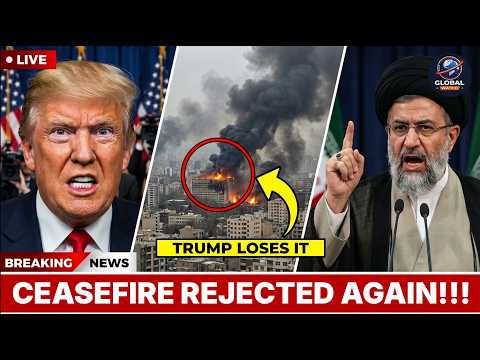
The most shocking fact from the Iran–U.S. talks in Islamabad is also the clearest: the negotiations ended without an agreement because Iran refused to accept the American demand for an explicit commitment not to develop a nuclear weapon. U.S. Vice President JD Vance told reporters the “core goal” of President Donald Trump’s administration is an affirmative pledge from Tehran that it will not seek a nuclear weapon and will not pursue the tools that would let it quickly achieve one. ([apnews.com](https://apnews.com/article/2be904aee3f804892336730279e054b9?utm_source=openai))
According to the latest reporting from Islamabad, the third round of face-to-face talks concluded before dawn Sunday after roughly 21 hours of high-stakes diplomacy. Vance said the U.S. delegation was in constant communication with Trump and other senior officials throughout the process. But the U.S. left Pakistan without a deal, and the ceasefire—described as fragile and limited—remains exposed to the next escalation cycle. ([apnews.com](https://apnews.com/article/2be904aee3f804892336730279e054b9?utm_source=openai))
Pakistan’s role in hosting and facilitating the talks has put the country at the centre of a wider geopolitical contest: the U.S. and Iran are not only negotiating an end to a war, they are also testing whether Islamabad can sustain a diplomatic channel that can withstand public pressure, military timelines, and regional spoilers. The fact that the talks were held in Islamabad at all underscores how much the conflict has strained global markets and security planning—pressures that now reverberate far beyond the Middle East. ([apnews.com](https://apnews.com/article/2be904aee3f804892336730279e054b9?utm_source=openai))
What happened in Islamabad, hour by hour
Earlier in the process, reporting indicated that the delegations began face-to-face discussions and that talks were progressing. Two Pakistani officials described the resumption of discussions after a break, while another official said talks were “progressing well,” though they could not confirm whether both sides were in the same room. ([apnews.com](https://apnews.com/article/00bf6d9a8f19565dbcd437bc6bf09ea0?utm_source=openai))
But by the time Vance spoke, the gap was no longer about logistics or timing. It was about the substance of what the U.S. required Iran to promise. Vance framed the negotiations around a single non-negotiable objective: Tehran must provide an affirmative commitment that it will not pursue nuclear weapons and will not seek the enabling tools. ([apnews.com](https://apnews.com/article/2be904aee3f804892336730279e054b9?utm_source=openai))
That demand is not merely technical—it is political and strategic. For Washington, nuclear restraint is the yardstick for any durable ceasefire architecture. For Tehran, accepting a pledge that could be interpreted as surrendering its nuclear ambitions—especially under conditions of ongoing regional conflict—would likely collide with domestic red lines and the leadership’s bargaining posture. The result, in Islamabad, was an impasse that ended the round without a bridge agreement. ([apnews.com](https://apnews.com/article/2be904aee3f804892336730279e054b9?utm_source=openai))
Geopolitical stakes: ceasefire diplomacy under pressure
Vance’s departure followed a warning delivered before the talks: the U.S. leadership wanted Iran to negotiate in good faith, and the vice president publicly cautioned against “playing” the U.S. as he headed to Pakistan. ([apnews.com](https://apnews.com/article/b82625fd24adb2336a5a9615b6953629?utm_source=openai))
That warning matters because it signals a shift from exploratory diplomacy to deadline-driven bargaining. The U.S. is not just seeking an end to fighting; it is seeking a verifiable political commitment that can be sold domestically and defended internationally. When those commitments are not forthcoming, Washington appears willing to let diplomacy fail rather than accept an agreement it cannot enforce. ([apnews.com](https://apnews.com/article/b82625fd24adb2336a5a9615b6953629?utm_source=openai))
For Iran, the refusal to accept U.S. terms suggests Tehran believes the U.S. is demanding more than a ceasefire—effectively asking for nuclear limitations that would change the strategic balance. With the conflict entering its seventh week and having already shaken global markets, both sides are operating under constraints that make compromise harder and delay more dangerous. ([apnews.com](https://apnews.com/article/2be904aee3f804892336730279e054b9?utm_source=openai))
Pakistan’s position is particularly delicate. By hosting talks, Islamabad has attempted to translate diplomatic leverage into regional stability. Yet hosting also raises the cost of failure: if the talks collapse, Pakistan absorbs reputational and security risk while also facing domestic political pressure about whether it is being used as a venue for powers that do not share Pakistan’s priorities. ([apnews.com](https://apnews.com/article/00bf6d9a8f19565dbcd437bc6bf09ea0?utm_source=openai))
And there are regional ripple effects. The U.S.–Iran conflict has already been described as having killed thousands and destabilized markets. Even when negotiations are underway, the risk calculus does not pause: military planning, missile and strike cycles, and regional proxy dynamics continue to evolve. That means the next escalation could arrive faster than diplomacy can recover—especially if the U.S. and Iran treat Islamabad as one round in a longer sequence rather than a decisive turning point. ([apnews.com](https://apnews.com/article/2be904aee3f804892336730279e054b9?utm_source=openai))
Zimbabwe and Southern Africa will feel this in three direct ways: energy and transport costs, food-price volatility, and diplomatic bandwidth. When Middle East conflict intensifies or threatens to intensify, global shipping insurance premiums rise, freight costs climb, and energy prices can surge—pressuring import-dependent economies across the region. That pressure lands on consumers in Zimbabwe through higher prices for essentials and through tighter fiscal space for government and households already managing inflation and currency instability.
Second, food insecurity risks increase when trade routes face disruption or when commodity markets anticipate longer conflict. Southern Africa’s food systems are sensitive to global price swings, and even short disruptions can widen affordability gaps—especially for low-income households. The failure of talks to produce a durable agreement increases the probability of prolonged volatility.
Third, diplomacy in Southern Africa is not insulated. When major powers are locked in nuclear-linked bargaining, international forums—UN votes, sanctions enforcement debates, and humanitarian resolutions—become harder to navigate. Zimbabwe’s regional partners in SADC will be forced to manage competing pressures: calls for de-escalation versus demands for alignment with specific geopolitical blocs.
In Islamabad, the U.S. left with a message: without an Iranian commitment on nuclear weapons, there is no deal. Iran left with a message of its own: U.S. terms are not acceptable. The immediate consequence is a diplomatic dead-end after 21 hours—an outcome that raises the probability that the ceasefire remains temporary rather than transformational. ([apnews.com](https://apnews.com/article/2be904aee3f804892336730279e054b9?utm_source=openai))
For Zimbabwe and Southern Africa, the warning is blunt: when the world’s most consequential nuclear bargaining fails in a high-profile venue, the economic shock does not wait for the next round of talks. It arrives through energy, shipping, and food prices—turning distant negotiations into local hardship.
CTA:
Note: This report is based on publicly available wire updates from Islamabad and Washington and reflects the latest stated positions from both sides as negotiations concluded without agreement. ([apnews.com](https://apnews.com/article/2be904aee3f804892336730279e054b9?utm_source=openai))