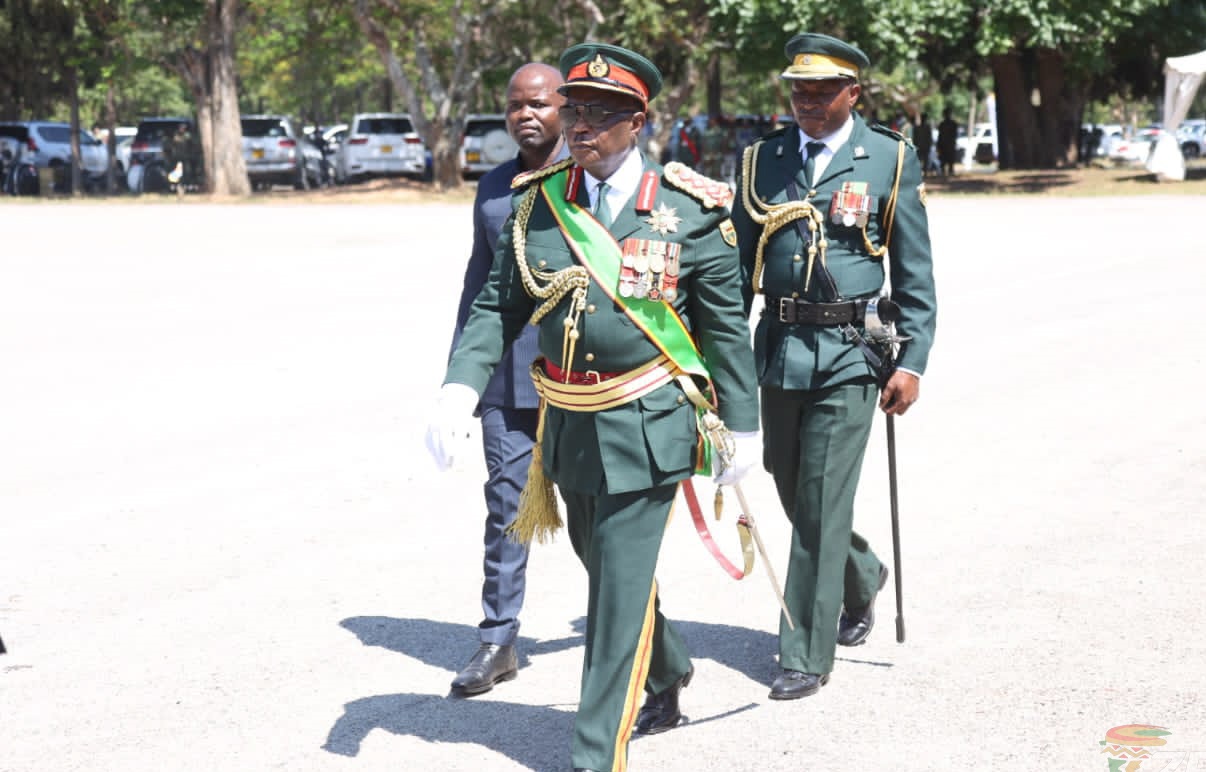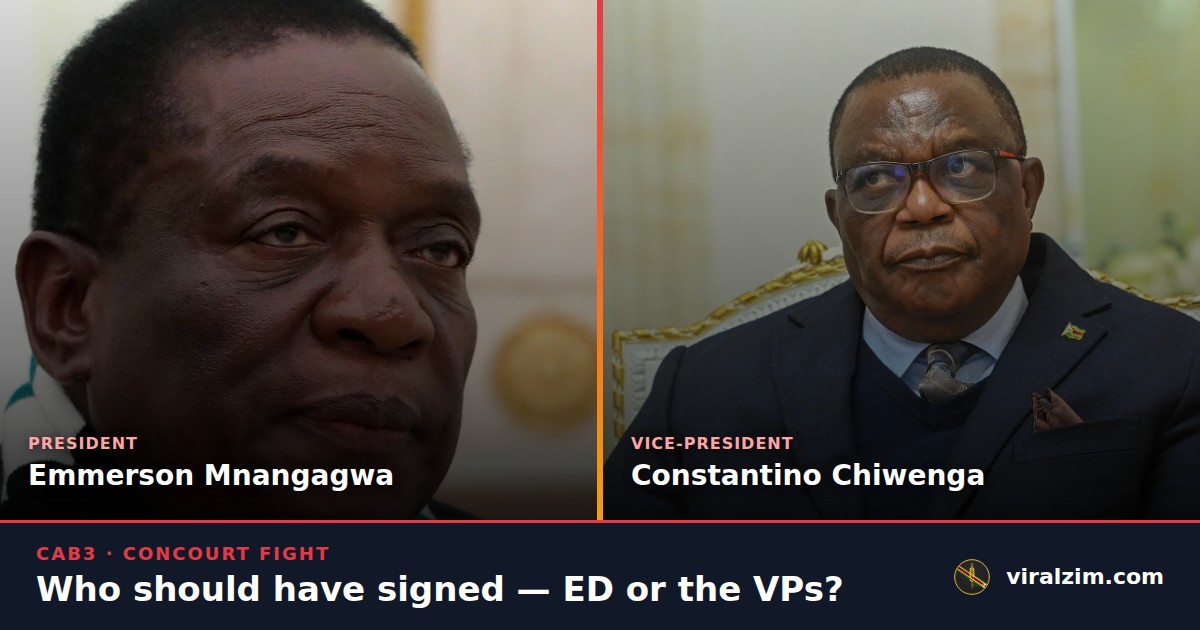
The most explosive detail in President Emmerson Mnangagwa’s latest security shake-up is not the dismissal itself—it is the stated reason: ED has fired the CIO boss, Fulton Mangwanya, for working with Vice President Constantino Chiwenga, according to internal communications and sources close to the State security apparatus.
In a move that signals intensifying factional pressure inside Zimbabwe’s security and political command chain, the dismissal of Mangwanya—described by multiple sources as a senior figure at the centre of intelligence coordination—has triggered immediate questions about who is shaping the country’s security priorities, and whether the VP’s influence is being actively curtailed.
While Zimbabwe’s ruling party and government have repeatedly insisted that security decisions are “operational” and “non-political,” the timing and the language used around this case point to a deeper struggle over loyalty, access to information, and control of strategic intelligence flows—issues that reverberate far beyond Harare.
Dismissal tied to alleged coordination with VP Chiwenga
Multiple officials and political observers say the decision to fire Fulton Mangwanya was communicated through internal channels as a consequence of alleged working relationships with Vice President Constantino Chiwenga. The allegation, as described to this newsroom, centres on coordination that senior security insiders interpret as bypassing or undermining the chain of command expected by the President’s office.
Chiwenga remains one of the most powerful figures in Zimbabwe’s post-2017 political landscape: a former military commander with deep institutional ties and a long record of influence over security policy. Any attempt to limit Chiwenga’s reach—especially through intelligence leadership—would be consistent with a broader pattern seen across the region, where rival networks compete for control of information and coercive capacity.
For Zimbabwe, the stakes are immediate. The CIO—Zimbabwe’s Central Intelligence Organisation—has historically been at the centre of how the state anticipates threats, manages internal stability, and monitors both domestic political dynamics and external influence. When the head of such an institution is removed over alleged “working with” a senior executive, it is not just a personnel change; it is a signal about who gets to set the intelligence agenda.
Security analysts in the region say that intelligence institutions are rarely insulated from political contestation, especially when the leadership is drawn from networks that overlap with the military and ruling-party structures. “In systems where intelligence and political authority are intertwined, dismissals like this are rarely about a single operational disagreement,” said one Southern Africa-based security analyst who requested anonymity due to the sensitivity of the topic. “They are about control—control of information, control of access, and control of who reports what to whom.”
That interpretation matters because it reframes the case from a narrow human-resources dispute into a strategic realignment inside the security state.
Regional implications: intelligence power, sanctions risk, and SADC stability
Zimbabwe’s security leadership does not operate in a vacuum. Southern Africa is currently navigating a volatile mix of election-related tensions, cross-border criminal networks, and intensifying great-power competition for influence. Intelligence control affects how governments respond to everything from insurgent spillover to organised crime and disinformation campaigns.
For Harare, the geopolitical context is also shaped by international pressure over governance and human rights. When security leadership changes abruptly, it can influence how Zimbabwe’s security services cooperate with regional partners and how the country manages scrutiny from Western governments and multilateral institutions.
In practical terms, intelligence leadership affects:
How Zimbabwe assesses threats to internal stability, including protest planning and political mobilisation.
How it monitors cross-border movements linked to trafficking and armed groups.
How it coordinates with allies in the region—particularly where security cooperation is sensitive to political alignment.
For SADC and the wider region, the risk is that internal political contestation can spill into security decision-making, creating uncertainty among partners and complicating joint operations. If intelligence leadership is perceived as aligned to a particular faction, then cooperation can become selective—undermining the very trust required for effective regional security coordination.
Zimbabwe’s leadership has also been under pressure to demonstrate stability to investors and creditors. Abrupt security shake-ups can unsettle markets and complicate negotiations, particularly when international observers interpret the moves as signs of internal fragmentation.
That is why this case is being watched closely beyond Zimbabwe’s borders. In recent years, the region has seen multiple instances where intelligence and security leadership changes have preceded broader political shifts—sometimes followed by crackdowns, sometimes by reconfigurations of patronage networks, and often by both.
“When the head of an intelligence agency is removed for alleged links to a top executive, it tells you that the state is recalibrating its internal balance of power,” said a regional political risk researcher. “That recalibration can affect everything from policy continuity to the way Zimbabwe engages with external partners.”
In Zimbabwe’s case, the VP’s stature means the dismissal is likely to be interpreted as a direct message to the security establishment: loyalty will be tested, and the command structure will be enforced more tightly.
Yet the most consequential question remains unanswered in public: what exactly was Mangwanya’s role in the alleged coordination with Chiwenga, and what evidence was used to justify the dismissal? Without transparent documentation, the risk is that the public narrative will be shaped by factional interpretations rather than verifiable facts.
Zimbabwe’s information environment has often been characterised by limited official disclosure on security matters. That opacity can fuel speculation—especially when the language used in internal communications is politically charged. For citizens, the uncertainty can translate into fear and confusion; for international partners, it can translate into unpredictability.
As of the time of writing, there has been no detailed public statement laying out the full basis for the firing, the specific conduct alleged, or the process followed. What is clear is that the decision is being framed as a consequence of working with Vice President Chiwenga—an explanation that, in Zimbabwe’s power structure, cannot be read as merely administrative.
For Southern Africa, this is a reminder that Zimbabwe remains a strategic node. Its security posture influences regional perceptions of stability, and its political leadership decisions can ripple into how neighbouring states manage risks associated with migration, cross-border crime, and political contagion.
In the coming days, attention will focus on who is appointed to replace Mangwanya, whether the CIO’s internal structure is reorganised, and whether other security figures are moved—signals that will indicate whether this is a one-off purge or the start of a broader reshuffle.
Click to follow the latest updates and analysis:
Stay ahead of Zimbabwe’s security and political developments.
Choose an option: