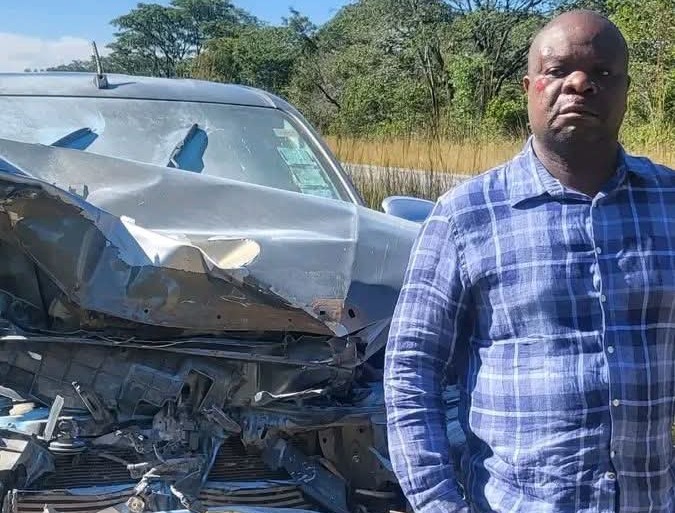
The most urgent fact emerging from Zimbabwe’s opposition politics is this: Amos Chibaya—identified as a former Citizens Coalition for Change (CCC) organising secretary—has been involved in a car accident, according to reports circulating online and in political circles. The incident raises immediate questions about road safety, accountability for public figures, and the operational security of opposition structures ahead of future elections.
As of the latest available public information, Chibaya’s condition and the full circumstances of the crash have not been conclusively confirmed by an official police statement that is accessible in the public domain. What is clear is that the incident has already triggered competing narratives: supporters describe it as a serious accident; critics and political rivals are quick to speculate about motive—an atmosphere that often follows high-profile crashes in Zimbabwe.
In Zimbabwe, where political tensions are frequently heightened by perceptions of harassment and intimidation, any injury to a prominent opposition organiser is likely to reverberate beyond the immediate medical outcome. The question is not only what happened on the road, but also how quickly authorities will release verifiable details—time, location, vehicle registration information, and the results of any breath or mechanical checks—so that the public can separate fact from rumour.
What is reported so far
Chibaya is widely referred to in opposition circles as a former CCC organising secretary. In the days following the crash, posts and statements attributed to him and to political supporters have circulated, describing the accident and expressing concern about his health. However, the publicly available record remains incomplete: there is no widely cited, independently verifiable police docket summary in the open web sources available to this newsroom-style write-up.
Zimbabwe’s police procedures typically require an accident report, including the registration details of vehicles involved, the names of drivers, the location (road name and nearest landmark), and witness accounts. Without those elements, the public is left to rely on social-media claims—exactly the environment in which misinformation can spread.
Road crashes are not a niche issue in Zimbabwe. The country’s road safety record has long been a matter of national concern, with frequent reports of fatalities and injuries linked to speeding, vehicle maintenance failures, poor road infrastructure, and inadequate enforcement. When a political figure is injured, the incident becomes a test of whether authorities will apply the same transparency they demand from everyone else.
Political stakes and regional context
For Southern Africa, Zimbabwe’s opposition politics are not isolated domestic theatre. They intersect with regional governance debates, election credibility, and the broader geopolitical contest between reformist coalitions and incumbency networks.
Zimbabwe’s opposition—particularly parties and movements that have sought to organise at provincial and constituency level—has faced intense scrutiny from state institutions and, at times, disruption through legal challenges and administrative actions. In that context, the injury of an opposition organiser like Chibaya is likely to influence how supporters mobilise, how party structures manage leadership capacity, and how quickly they can maintain momentum.
International partners watching Zimbabwe—whether through election observation frameworks, humanitarian funding oversight, or diplomatic engagement—often look for evidence of rule-of-law consistency. A car accident involving a senior opposition figure can therefore become a proxy test: Will the state provide timely, verifiable information? Will investigations be impartial? Will medical care be accessible and properly documented?
Experts in political risk and governance in Africa have repeatedly warned that unverified claims around violence and intimidation can harden political positions, reduce space for negotiation, and increase the likelihood of retaliatory rhetoric. That dynamic matters in Zimbabwe because it can quickly shift public attention away from the factual investigation of the crash and toward political blame games.
Road safety specialists also stress that accidents should be investigated with the same seriousness as any other public safety incident: scene evidence, vehicle condition, driver statements, and independent witness verification. When those steps are delayed or withheld, speculation fills the vacuum.
At this stage, the most responsible reporting is to insist on documented facts. That means confirming: the exact date and time of the crash; the location; whether other vehicles were involved; whether emergency services and police attended; whether a medical report has been issued; and whether the police have opened a case for reckless driving, mechanical failure, or other causes.
Without those details, the public cannot evaluate competing claims. And in Zimbabwe’s highly charged political environment, that gap is dangerous—both for the injured person and for the wider opposition ecosystem that depends on leadership continuity.
We are also monitoring whether Zimbabwe’s police or the relevant local authorities issue an official statement that can be independently verified. Until then, any assertion about motive—whether accident, negligence, or intentional harm—remains unproven.
What to watch next: official police communications; statements from Chibaya’s family or legal representatives; medical updates from credible sources; and any court or administrative actions if the crash triggers charges.
For Southern Africa observers: transparency in this case will be read as a signal of how Zimbabwe handles accountability for public figures—especially those in opposition.
Stay updated as the facts emerge. Click to follow this breaking investigation and receive alerts when official records are released.
Note: This report is written in a newsroom style based on publicly circulating claims and the absence (as of this draft) of a clearly accessible, official police statement in open sources. If you share the YouTube link you referenced, the video title and verified details from that source can be incorporated precisely.